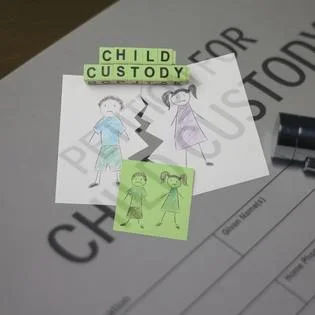
Child Custody & Guardian
Looking for experienced Child Custody and Guardianship, or child support lawyer?
View Service →

A.A. Dewan & Co. assists local couples, overseas Pakistanis and international clients with court marriage in Pakistan, including Nikah documents, marriage registration, MRC guidance, witness requirements and overseas coordination.

Explore our related legal services for this practice area.
Looking for experienced Child Custody and Guardianship, or child support lawyer?
View Service →
When it comes to recovering dowry articles, legal action can be a vital step, especially in cases where the return of these items is disputed.
View Service →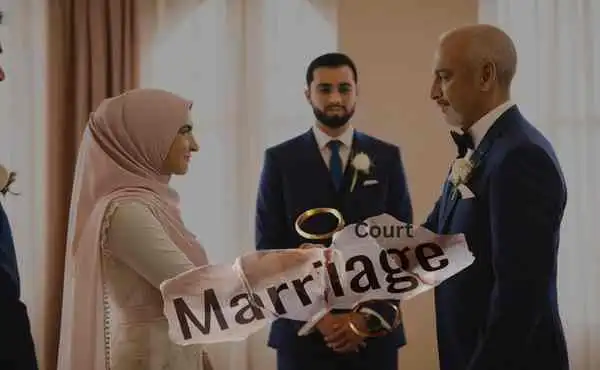
A.A. Dewan & Co., provides legally valid and Shariah-compliant court marriage services in accordance with Shariah Muhammadi and the laws of Pakistan.
View Service →
Child custody and maintenance in Muslim family law are governed by principles that prioritize the well-being and welfare of the child.
View Service →
A dowry, or “jahez” in Urdu, is money, gifts, or items like furniture, clothes, or gold that the bride’s family gives to the groom’s family during a wedding in Pakistan.
View Service →
The adoption process begins with a consultation with a family law lawyer, adoption agency, or the social welfare department.
View Service →
In Pakistan, the Maintenance of Wife in Islam is both a legal and religious right. According to Islamic law and the Muslim Family Laws Ordinance, 1961, a husband must support his wife financially.
View Service →
Affordable Divorce Lawyer Services provide expert legal guidance for a smooth and stress-free marriage dissolution.
View Service →Quick answer: “Court marriage” is a commonly used search term, not the name of a separate nationwide marriage ceremony. For Muslim couples, the legal process generally centres on a valid Nikah, free consent, the required witnesses and documentation, followed by registration under the applicable legal framework.
Section 5 of the Muslim Family Laws Ordinance, 1961 requires every marriage solemnized under Muslim law to be registered in accordance with the Ordinance. The Pakistan Code also provides for licensed Nikah Registrars and the reporting of marriages that were not solemnized by the Nikah Registrar.
That distinction matters. A couple searching for a “court marriage” may actually need help with Nikah documentation, registration, an MRC, an overseas document route, or a separate legal issue such as family opposition or a previous marriage. The correct process should be identified before documents are prepared.
For matters outside marriage procedure, see our Family Law Services in Pakistan, or the relevant service pages for marriage dissolution, child custody and guardianship, and family law for overseas Pakistanis.
Scope note: This page primarily addresses the Muslim-marriage search intent commonly called “court marriage.” Non-Muslim, interfaith, foreign-national and nationality-sensitive cases can involve different statutory or personal-law requirements and should be reviewed on their own facts.
Before arranging a Nikah, the parties should confirm the requirements that apply to their age, religion, identity, marital status, jurisdiction and intended registration route. A generic checklist cannot safely replace case-specific review.
The parties should enter the marriage voluntarily. Coercion, threats, confinement or other safety concerns require separate legal assessment.
The current marriage-age and child-marriage law must be checked for the province or territory connected to the marriage.
CNIC, NICOP or passport information should be accurate and consistent with the marriage documents.
Divorce, khula, widowhood or an existing marriage can create additional legal and documentary questions.
Do not rely on old online charts that treat one age rule as universal across Pakistan. The law can differ by province or territory and can change. For example, Sindh's 2013 law defines a child as a male or female under 18; the Islamabad Capital Territory Child Marriage Restraint Act, 2025 uses an under-18 definition; and Punjab's 2026 child-marriage framework also defines a child as a person under 18.
The Sindh Child Marriages Restraint Act, 2013 defines a child as a person, male or female, under 18.
Punjab's 2026 child-marriage legislation uses an under-18 definition and changed the previous age framework.
The ICT Child Marriage Restraint Act, 2025 defines a child as a person under 18.
Check the law that applies to the actual place and circumstances of the marriage before proceeding.
Important: Age is only one part of eligibility. Religion, personal law, nationality, prior marital status and the intended registration route can change the legal analysis.
For a straightforward Muslim marriage, the process is generally built around document review, lawful Nikah formalities and registration. The exact sequence can vary by jurisdiction and facts.
Confirm the parties' identity, age, religion, marital status, nationality, intended location and any special circumstances.
Organize CNIC, NICOP or passport records, witness information, photographs and previous-marriage documents where relevant.
Arrange the Nikah process with the required parties, witnesses and documentation, including the agreed dower terms where applicable.
Check names, identity numbers, addresses, marital status and other prescribed entries carefully before signatures are completed.
Follow the applicable registration process through the licensed Nikah Registrar and competent local authority.
Complete the relevant local registration process and obtain the official marriage record or MRC where applicable.
If the documents will be used abroad, check translation, verification, MOFA attestation, apostille or consular requirements.
Where there is family opposition, a prior marriage, foreign nationality or another dispute, obtain separate advice on that issue.
The exact checklist depends on the parties and the registration authority. A properly prepared file normally starts with identity, witness and marital-status records.
Do not rely on a generic checklist where one party is abroad, is a foreign national, was previously married, cannot attend a required step, or has identity details that differ across documents.
These terms are often mixed together in online searches. The Nikah Nama records the marriage contract and prescribed particulars, while the relevant registration authority handles the official registration process and may issue a computerized Marriage Registration Certificate (MRC) according to the applicable system.
The phrase “NADRA marriage certificate” is also widely used by searchers. The exact issuing and registration route should be confirmed with the competent local authority rather than assuming that every marriage certificate is issued directly by NADRA.
For overseas use: Pakistan's Ministry of Foreign Affairs publishes specific requirements for attestation of Nikah Nama and Marriage Registration Certificate documents. Those requirements should be checked again before submission because document and consular procedures can change.
Overseas couples often search for online Nikah in Pakistan because one party cannot easily travel. Remote arrangements require more than a video call: identity, consent, signatures, witnesses, the original Nikah Nama, registration requirements and later document use all need to be planned.
Current Ministry of Foreign Affairs guidance specifically addresses marriages that took place online. For attestation, MOFA states that the original Nikah Nama must be duly signed by the bride, groom and witnesses with their thumb impressions, together with the other required marriage documents.
Before arranging an online or remote Nikah: confirm the applicable legal route, identity and signature requirements, witness arrangements, registration procedure and the requirements of the country where the marriage documents will later be used.
Overseas Pakistanis may need Pakistan-based legal guidance for Nikah, registration, document correction, attestation or later use of marriage records abroad. Distance, foreign identity records, travel limits and destination-country requirements can make an apparently simple marriage matter more complicated.
Review available identity, marital-status and foreign documents before the Nikah or registration stage.
Identify the relevant local registration route and the documents required for that jurisdiction.
Review the appropriate Pakistan attestation or apostille route when documents are intended for overseas use.
The foreign embassy, immigration authority or receiving institution may impose separate translation or legalization requirements.
A.A. Dewan & Co. assists clients in the UK, UAE, Saudi Arabia, USA, Canada, Europe and elsewhere with the Pakistan-law side of marriage documentation and related family-law matters.
For wider cross-border family matters, see Family Law for Overseas Pakistanis.
A marriage involving a foreign national can require additional document planning. Passport and immigration records, proof of marital status, translation, nationality-specific documents and later attestation requirements may all become relevant.
Pakistan MOFA guidance states that a Nikah Nama and Marriage Registration Certificate for a wedding with a foreign national must be supported by a copy of the foreign spouse's passport, Pakistani visa and date of entry in Pakistan for the published attestation process.
International-use warning: A Pakistan marriage record does not automatically satisfy the immigration, visa, family-reunification or recognition requirements of another country. Check the destination country's current requirements separately.
Some couples seek court-marriage assistance because their families oppose the relationship or because they are concerned about threats, harassment, unlawful confinement or false allegations. These are separate legal issues and should not be treated as automatic steps in every marriage.
Where a genuine safety or criminal-law concern exists, the facts should be assessed separately so that any complaint, protective application, statement or court proceeding is used only where legally appropriate. Marriage documentation and protection litigation should not be conflated.
Urgent safety concern: If there is an immediate risk of violence, unlawful confinement or another emergency, seek case-specific legal and emergency assistance instead of relying only on an online guide.
There is no responsible single fee or guaranteed timeline for every court-marriage matter. Cost and timing can change according to city, registration authority, document condition, urgency, prior marital status, foreign nationality, translation, attestation and the amount of professional legal work required.
Usually involves standard identity review, Nikah documentation and local registration planning.
May involve remote coordination, additional signatures, attestation and destination-country requirements.
Can require passport, visa, entry, translation and consular documentation beyond a standard local file.
Family opposition, safety concerns or prior marital records can materially change the legal work required.
Before engaging a lawyer or service provider, ask for a clear scope showing what is included in professional fees and which government, registration, translation, courier, attestation or third-party charges are separate.
Our role is to provide Pakistan-law guidance and practical coordination based on the actual facts of the marriage. Depending on the case, assistance may include:
Pakistan-law scope: If your matter also requires foreign immigration, adoption, family or nationality advice, obtain advice from a lawyer or authority qualified in that jurisdiction.
For legal and procedural information, primary government sources should be preferred over generic blogs, social-media posts or outdated checklists.
Pakistan Code source for registration of Muslim marriages and related family-law provisions.
Official Sindh law defining child marriage and the under-18 framework in Sindh.
Punjab government resource for the current under-18 child-marriage framework.
Pakistan Code source for the Islamabad Capital Territory child-marriage framework.
Official requirements for Nikah Nama and Marriage Registration Certificate attestation.
Official MOFA portal for apostille information and document processing.
Pakistan Code source for the family-court framework and its Schedule of family matters.
A court-marriage file can contain sensitive identity and family information. Our approach is to keep the process structured, document-focused and tied to the legal requirements that actually apply to the case.
Marriage matters are handled within the wider Pakistan family-law framework when connected issues arise.
Identity details, marital status and registration documents are reviewed before unnecessary steps are taken.
Pakistan-law guidance is available for clients managing marriage documentation from abroad.
Where marriage issues overlap with custody, maintenance, dissolution or guardianship, the related legal route can be identified early.
See our Family Law Services in Pakistan for the wider range of family-law matters handled by the firm.
“Court marriage” is a common term rather than the name of a separate nationwide marriage ceremony. For Muslim couples, the legal process generally involves a valid Nikah, free consent, the required witnesses and documentation, followed by registration under the applicable marriage-registration framework.
A marriage that satisfies the applicable personal-law, age, consent, documentation and registration requirements can be legally recognised. The exact route depends on the parties, religion, jurisdiction and circumstances.
Common documents may include valid CNIC, NICOP or passport records for the parties, witness identity documents, photographs where required, and documents relating to a previous marriage where applicable. Foreign-national and overseas cases can require additional documents.
Marriage-age rules must be checked for the jurisdiction that applies. Sindh law defines a child as a person under 18, the Islamabad Capital Territory Child Marriage Restraint Act 2025 uses an under-18 definition, and the Punjab Child Marriage Restraint Act 2026 also defines a child as a person under 18. Do not rely on an outdated national age chart without checking the current local law.
Not necessarily. The phrase “court marriage” does not by itself mean that a judge must solemnize the Nikah in a courtroom. For Muslim marriages, the relevant process centres on the Nikah and registration requirements applicable to the parties.
Do not assume a single answer applies to every case. Free consent, legal capacity, personal law, age, family circumstances and any safety or criminal-law issues should be assessed on the actual facts before the marriage is arranged.
The Nikah Nama records the marriage contract and its prescribed details. The Marriage Registration Certificate (MRC) is an official registration record issued through the competent registration system. They should not automatically be treated as the same document.
Overseas Pakistanis can obtain Pakistan-law guidance for Nikah, documentation, registration and later attestation. The procedure depends on physical presence, identity documents, witnesses, signatures, nationality and the authority responsible for registration.
Current Ministry of Foreign Affairs guidance specifically addresses marriages that took place online. Its published requirements include an original Nikah Nama duly signed by the bride, groom and witnesses with thumb impressions, together with the other required marriage documents.
It may require translation, verification, MOFA attestation, apostille or another legalization step depending on the destination country and intended use. The receiving embassy, immigration authority or foreign institution should also be checked for its current requirements.
There is no responsible universal timeline. Timing can depend on document readiness, jurisdiction, Nikah and registration arrangements, prior marital status, foreign documents, local authority processing and any additional legal steps.
There is no single fee that applies to every case. Total cost can vary by city, documentation, registration work, urgency, foreign-national involvement, attestation needs and the scope of professional legal assistance.
If you are planning a court marriage, Nikah or marriage registration in Pakistan, send the city where the marriage is planned, the nationality and current location of both parties, age, marital status, available identity documents, and whether the marriage record will be used in Pakistan or abroad. This helps identify the relevant legal and document route before you proceed.
Marriage matters can connect with custody, maintenance, guardianship, dissolution and other family-law issues. Use the relevant service page where your matter goes beyond marriage registration.
Broader legal guidance for marriage, custody, maintenance, guardianship and family disputes.
Legal guidance where an existing marriage is being ended or marital status needs separate review.
Assistance with custody, guardianship, visitation and child-welfare matters.
Legal support for child-maintenance claims and related family-court proceedings.
Guidance on spousal maintenance and related family-law issues.
Pakistan-law guidance on child guardianship and adoption-related legal matters.
Guidance on dowry-related rights, disputes and recovery matters.
Pakistan-law family services for clients living abroad.
Get knowledge on business, IPR, employment, family, banking, and criminal laws in Pakistan.

Trusted family relationships can sometimes lead to property disputes in Pakistan. Learn the legal options available for overseas Pakistanis when ownership, investment, or property rights become unclear.
Read Article →
Learn how overseas Pakistanis can deal with property disputes in Pakistan, including illegal possession, ownership conflicts, document issues, legal remedies, and ways to protect property rights.
Read Article →
Platforms such as Facebook, Instagram, TikTok, YouTube, Snapchat, and X connect billions of people every day. They help businesses grow, allow people to share ideas, and provide entertainment within seconds.
Read Article →Have questions or need legal advice? Our expert team is ready to assist you.
“A trusted consulting firm providing expert solutions with strategic insights.”
Discuss your legal needs with our experienced team and explore tailored solutions.