
Copyright Infringement
Copyright Infringement happens when copyrighted material is used without permission, such as copying books, sharing music, or using images and software illegally.
View Service →

A.A. Dewan & Co. advises foreign companies, international brands and Pakistan-based businesses on domain name conflicts, cybersquatting, .pk disputes, trademark-domain issues, UDRP strategy and online brand impersonation connected with Pakistan.

Explore our related legal services for this practice area.
Copyright Infringement happens when copyrighted material is used without permission, such as copying books, sharing music, or using images and software illegally.
View Service →
With the guidance of a skilled copyright lawyer, we ensure your creative works are properly protected under copyright law.
View Service →
Are you an inventor, entrepreneur, or business owner with a unique idea? Securing a patent is crucial to protecting your innovation and preventing others from copying or profiting from your work.
View Service →
Protect your brand identity with our fast and reliable trademark registration services.
View Service →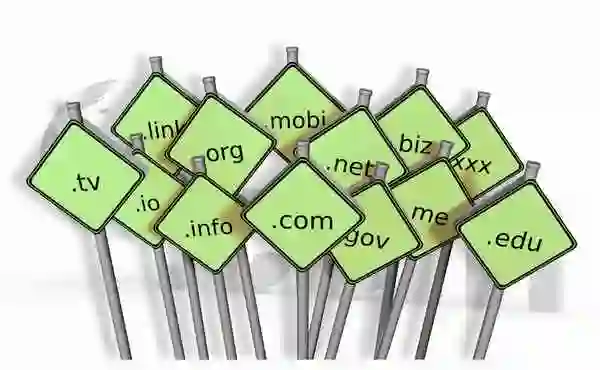
Domain Name Registration with the Trademark Registry of Pakistan helps protect your brand from misuse or unauthorized use.
View Service →
Industrial design refers to the visual aspects of a product that are new, original, and distinct, such as its shape, configuration, pattern, or ornamentation.
View Service →
Our expert trademark attorneys conduct a thorough search to identify potential conflicts before you apply for trademark registration.
View Service →
We provide expert Madrid Protocol services to help businesses obtain and manage international trademark protection through a single application filed with WIPO
View Service →A domain registration gives the registrant control of a web address under the registrar's terms, but it does not automatically establish ownership of the underlying brand. A business can therefore hold a domain while still facing trademark, passing-off, contractual or domain-policy issues if the name conflicts with another party's rights.
PKNIC's published policy states that acceptance of a .pk registration does not itself confer rights in the legitimacy, ownership or use of the name. That distinction is important for businesses that assume securing the domain is enough to secure the brand.
Practical approach: protect the online address and the commercial identity separately. Depending on the business, that can involve domain registration, trademark clearance, trademark registration, monitoring and an enforcement plan.
Legal author: Ahmed Ali Dewan, Advocate Supreme Court.
Reviewed by: A.A. Dewan & Co. Legal Team.
Last substantive review: 26 September 2026.
A foreign brand can face a Pakistan-connected domain problem even when its main business is based overseas. Examples include a confusing .pk registration, a website targeting customers in Pakistan, an impersonation site, a reseller using a misleading domain, or a registrant seeking payment for a domain that tracks a protected brand.
We keep the legal routes distinct. A .pk dispute can involve PKNIC-specific procedures, while a .com, .net or other gTLD dispute may engage the UDRP. Court proceedings, contractual remedies or platform action can also be relevant depending on the facts.
A domain may reproduce or closely imitate a brand name in a way that creates source, affiliation or sponsorship confusion.
A registrant may target an existing brand and seek to sell, rent or transfer the domain for an inflated amount.
Look-alike domains can be used for fake storefronts, misleading contact pages, phishing, traffic diversion or reputation abuse.
Ownership conflicts can arise when a domain was registered by a former distributor, employee, agency, developer or business partner.
A competing business may adopt a domain that raises trademark, passing-off or unfair commercial conduct concerns.
Legitimate registrants may need to demonstrate rights, legitimate interests and good-faith registration or use when challenged.
A dispute involving a .pk domain should be assessed under the current PKNIC registration and dispute framework. PKNIC states that disputes concerning .pk registrations are subject to its domain dispute process and binding arbitration framework, which is primarily based on the UDRP but includes Pakistan-specific provisions and procedures.
PKNIC also states that registration of a .pk domain does not itself adjudicate whether the registrant has a legitimate right to the name. That is why trademark ownership, recognized rights, business use, evidence of conduct and the current dispute rules should be reviewed before deciding whether to send a notice, commence a proceeding or negotiate.
The Uniform Domain Name Dispute Resolution Policy (UDRP) is an administrative framework used for qualifying trademark-based disputes involving domain names registered through ICANN-accredited registrars. It is particularly associated with abusive registrations such as cybersquatting.
A complainant generally needs to establish all three core UDRP elements:
UDRP proceedings are not a substitute for every type of trademark or commercial dispute. The remedies under the policy are principally transfer or cancellation of the domain name; monetary damages are not awarded through the UDRP itself.
Trademark protection can materially strengthen a domain enforcement strategy because many domain dispute systems focus on trademark rights. Before launching or expanding a domain-led brand, it is useful to assess whether the name is available and whether the goods or services are covered by the correct trademark classes.
Check identical and potentially similar marks before committing to a domain-led business identity.
Protect the brand identity used with the domain through a filing strategy based on the relevant goods and services.
International brands can also review whether Pakistan should be included in their broader trademark portfolio. For eligible international trademark matters, see our Madrid Protocol services.
Domain disputes can change quickly. A website can be edited, redirected, parked, placed behind privacy services or transferred. Preserving the relevant evidence before escalation can therefore be important.
Confirm the exact domain, TLD, registrar or registry information and the current use of the domain.
Assess trademark registrations, pending rights, business use, ownership and relevant Pakistan connections.
Capture the website, communications, registration data and conduct relevant to the dispute before it changes.
Consider PKNIC procedures, UDRP, negotiation, legal notice, platform action, contract rights or court remedies as applicable.
Organize the rights, facts and evidence around the specific legal or policy test governing the dispute.
Review related domains, trademark coverage, social impersonation, marketplace misuse and future monitoring needs.
Prevention is usually less disruptive than trying to recover a domain after a product launch or marketing campaign. A practical protection plan can be proportionate to the value and visibility of the brand.
Domain misuse can be part of a wider problem involving copied logos, fake social accounts, marketplace listings, misleading advertisements or cloned websites. A response strategy should therefore look beyond the domain itself and identify which rights and platforms are actually involved.
Depending on the circumstances, connected rights may include trademarks, copyright and contractual ownership. See our copyright protection services and intellectual property services for related issues.
There is no reliable single price or timeline for every domain matter. A preventive trademark search or portfolio review is very different from a contested .pk proceeding, a UDRP complaint or response, a negotiated transfer, or court-related work.
Domain extension, dispute forum, trademark status, evidence volume, number of domains, urgency and the amount of drafting or representation required.
The applicable policy, response deadlines, registrar or provider procedure, settlement discussions, evidence issues and whether separate legal proceedings are required.
We connect the domain issue with the underlying brand rights instead of treating the web address in isolation.
International clients receive a separate assessment of the Pakistan position, including .pk and local trademark considerations.
We identify the records needed to support or defend a complaint before selecting the dispute route.
Trademark search, registration, Madrid strategy, copyright and broader IP issues can be coordinated where relevant.
These answers explain the general framework. The correct route depends on the domain extension, trademark rights, registrant conduct, applicable policy and the evidence available.
No. Registering a domain name gives you contractual control of that web address through the registrar, but it does not automatically create trademark rights. Brand protection should be reviewed separately under the applicable trademark law and filing strategy.
Yes. A foreign company or international brand can consider Pakistan trademark protection, .pk domain strategy and local enforcement options where its brand is used, targeted or misused in Pakistan. The appropriate route depends on the mark, ownership, domain extension and facts of the dispute.
Cybersquatting generally refers to abusive registration or use of a domain name that targets another party's trademark or brand, often to create confusion, divert users, sell the domain to the rights holder or exploit the brand's reputation. The legal test depends on the dispute policy and jurisdiction involved.
Disputes involving .pk domains are governed by PKNIC policy and its domain dispute process. PKNIC states that its dispute framework is primarily based on the UDRP, with Pakistan-specific requirements and procedures. A case should be reviewed against the current PKNIC rules before action is taken.
The UDRP applies to domain names registered in generic top-level domains handled by ICANN-accredited registrars, including commonly used extensions such as .com, .net and .org. It is designed for qualifying trademark-based abusive registration disputes rather than every type of domain disagreement.
A UDRP complainant generally must establish that the disputed domain is identical or confusingly similar to a trademark in which the complainant has rights, that the registrant lacks rights or legitimate interests in the domain, and that the domain was registered and is being used in bad faith.
No monetary damages are awarded through the UDRP. The principal remedies available through a successful UDRP proceeding are transfer or cancellation of the disputed domain name. Other claims or remedies may require a different legal route.
Useful evidence can include trademark registrations or applications, proof of brand use, website and domain screenshots, registrar or registration data where available, emails or sale offers, marketplace listings, advertising records, customer confusion, archived pages and a clear chronology of events.
A preventive strategy can include trademark clearance, timely trademark filing, registering important domain variants, maintaining accurate ownership records, monitoring confusing domain registrations and preserving evidence of brand use and reputation.
There is no single fee that applies to every matter. Cost depends on whether the work involves trademark searching, filing, evidence review, cease-and-desist correspondence, .pk proceedings, UDRP strategy, negotiations or court-related work. The scope should be assessed before a professional fee is quoted.
Share the disputed domain, trademark or brand details, the domain extension, relevant screenshots, any communication with the registrant and a short timeline. We can review the issue and identify the dispute, trademark or enforcement route that may be appropriate.
Get knowledge on business, IPR, employment, family, banking, and criminal laws in Pakistan.

Ideas now carry real commercial value. A name can become a brand, a design can become an asset, and creativity can become something worth protecting.
Read Article →
AI systems, or commission AI-assisted work, understanding who owns intellectual property rights.
Read Article →
How AI and the Law are shaping the future of justice, with AI improving legal research, case predictions, and courtroom efficiency.
Read Article →We provide professional legal advice and representation to individuals, businesses and international clients, with a commitment to protecting their legal interests.
Our lawyers focus on clear communication, practical legal guidance and responsible representation throughout every legal matter.
Our advocates apply professional legal knowledge and practical judgment to matters involving individuals, businesses and overseas clients.
We explain legal procedures, available options and potential risks in straightforward language, helping clients understand each stage of their legal matter.
We focus on careful documentation, professional confidentiality and timely communication, keeping our clients' rights and legal interests at the centre of our work.
Have questions or need legal advice? Our Law Firm expert team is ready to assist you.
“A trusted consulting Law Firm is providing expert solutions with strategic insights.”
Discuss your legal needs with our experienced team and explore tailored solutions.