

Legal Information Guide | October 2026
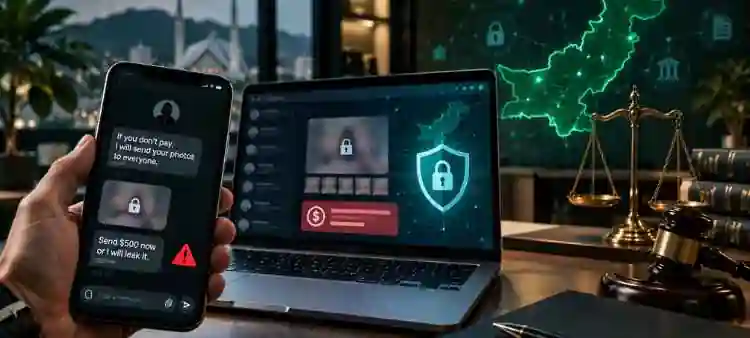
Quick Answer: If someone is blackmailing you online, save the threats, protect your accounts, and report the incident. Do not send more money or private images. You can report the account to the social media platform and contact the police or cybercrime authority in the country connected to the incident. In Pakistan, suspected cybercrime can be reported to the National Cyber Crime Investigation Agency (NCCIA).
Cyber blackmail can happen through WhatsApp, Facebook, Instagram, Snapchat, email, dating apps, or other online services.
A person may threaten to share private photos, reveal personal information, publish false claims, or damage your reputation unless you meet their demands.
These threats may involve money, more photographs, account access, or other demands.
Knowing what to do can help you protect your information, preserve evidence, and take informed action.
This guide explains how to get cyber blackmail help, respond to online threats, report the incident, and understand the legal options that may apply in Pakistan and across borders.
What Is Cyber Blackmail?
Cyber blackmail happens when someone uses digital communication to threaten or pressure another person into doing something. The threat may involve sharing private information, publishing images, spreading harmful material, or exposing personal messages.
For example, a person may threaten to publish someone's photographs unless they receive money.
Another person may threaten to reveal private conversations unless the victim provides access to an online account.
Cyber blackmail can also involve stolen personal data, manipulated images, or threats made through fake social media profiles.
The legal classification depends on what happened and which country's laws apply.
Not every unpleasant online message is a criminal offence. However, threats, coercion, extortion, and misuse of private material may raise serious legal issues.
What Should You Do If Someone Is Blackmailing You Online?
The first priority is to protect your safety, accounts, and evidence.
The following steps can help you respond.
1. Do Not Send More Money or Private Images
A blackmailer may claim that a payment will end the threats.
There is no guarantee that the person will keep that promise.
Sending money, passwords, or additional private material may create further risks.
If you have already paid, preserve the payment records and contact your bank or payment provider.
2. Save the Threatening Messages
Before deleting conversations or blocking the account, preserve the evidence if you can do so safely.
Useful information may include:
The threatening messages
Usernames and profile links
Phone numbers and email addresses
Dates and times
Screenshots showing the full conversation
Payment demands and receipts
Links to any published material
Keep the original messages and files whenever possible.
Do not change screenshots or create false evidence.
If the incident involves explicit images of a child, do not download, copy, or forward those images to collect evidence. Record the account details and seek help through the proper reporting channels.
3. Secure Your Online Accounts
Change passwords for accounts that may have been accessed without permission.
Turn on two-factor authentication. This is an extra security step that requires more than a password to sign in.
Check active login sessions and remove devices you do not recognize.
Review account recovery information and privacy settings.
If you suspect your email account has been compromised, secure it before changing passwords for connected services.
4. Stop Engaging With the Blackmailer
Avoid arguments, threats, or long conversations.
Once you have safely preserved relevant evidence, consider using the platform's blocking and reporting tools.
If the person threatens immediate physical harm, contact local emergency services or law enforcement without delay.
5. Report the Incident
Use the reporting tools provided by the relevant social media platform.
If the conduct may be criminal, report it to the appropriate law enforcement or cybercrime agency.
The correct authority depends on where you live, where the incident occurred, and which laws apply.
For cybercrime matters connected to Pakistan, the National Cyber Crime Investigation Agency is the designated federal investigation agency under the Prevention of Electronic Crimes Act, 2016, as amended.
6. Seek Legal Advice When Needed
Legal advice may be useful when threats continue, private material has been shared, significant money is involved, or the incident crosses national borders.
A qualified lawyer can review the circumstances, explain the relevant legal procedures, and advise on available remedies.
For Pakistan-related cases, further information about cyber crime legal services and PECA matters can help readers understand the legal issues involved.
What Types of Cyber Blackmail Are Common?
Cyber blackmail can take several forms.
| Type | Common example |
|---|---|
| Financial blackmail | Someone demands money to keep information private |
| Private photo blackmail | A person threatens to publish intimate photographs |
| Video blackmail | Someone threatens to release a private video |
| Social media blackmail | A fake account threatens or pressures another user |
| Account-related blackmail | Someone demands money after gaining access to an account |
| Identity-related threats | A person threatens to misuse personal information |
| AI deepfake blackmail | Someone uses or threatens to share manipulated images or videos |
These examples describe possible conduct. Whether a particular act is criminal depends on the evidence and relevant law.
What If Someone Threatens to Share Your Private Photos?
Threats involving private photographs or videos require special care.
The person making the threat may claim to have images from a previous relationship, a hacked account, or an online conversation.
Sometimes the person may have no genuine images at all. They may use edited screenshots or AI-generated material to create fear.
Regardless of the claim, avoid sending additional private material in response.
Preserve the threatening communications and report the account through the relevant platform.
Can You Stop Private Images From Being Shared?
Some online tools may help limit the spread of intimate images.
For adults whose intimate images meet its eligibility rules, StopNCII.org provides a free image-matching service.
The tool creates a digital fingerprint, called a hash, on your device. Participating platforms can use the fingerprint to identify matching content and act under their policies.
The service does not upload your original image or remove material from every website.
If the image was taken when you were under 18, the Take It Down service from the National Center for Missing & Exploited Children may be appropriate.
Take It Down can help limit the sharing of qualifying explicit images on participating platforms without uploading the original image.
These tools are not substitutes for reporting criminal threats to the appropriate authorities.
How to Report Cyber Blackmail
The reporting process depends on the country, platform, and nature of the threats.
Step 1: Identify the Platform
Record where the threats were made.
This may be WhatsApp, Instagram, Facebook, Telegram, Snapchat, email, or another service.
Preserve the account details and links.
Step 2: Prepare a Clear Incident Summary
Write down:
When the threats started
How the person contacted you
What they demanded
Whether money was paid
Whether any material was published
What evidence is available
Whether the person is known or anonymous
Explain events in date order.
Step 3: Report the Account to the Platform
Use the platform's official reporting process.
Choose the category that best matches the conduct, such as harassment, threats, impersonation, or non-consensual intimate images.
Keep any case number or acknowledgement.
Step 4: Report the Conduct to the Appropriate Authority
If you are in Pakistan, or the alleged offence has a relevant connection to Pakistan, check whether NCCIA has jurisdiction.
If you live in another country, check the local police or cybercrime reporting service.
You may need to make reports in more than one jurisdiction when an incident crosses borders.
Step 5: Keep Records of Your Reports
Save complaint acknowledgements, platform responses, and communications with the authorities.
Do not assume that filing a complaint automatically results in an arrest, prosecution, or content removal.
How to Get Cyber Blackmail Help in Pakistan
Pakistan has a legal framework for dealing with different forms of electronic crime.
The National Cyber Crime Investigation Agency investigates offences within its authority under the Prevention of Electronic Crimes Act, 2016 (PECA), as amended.
NCCIA's official cybercrime complaint guidance identifies several reporting methods.
These include its online complaint portal, official reporting channels, and Cybercrime Reporting Centres.
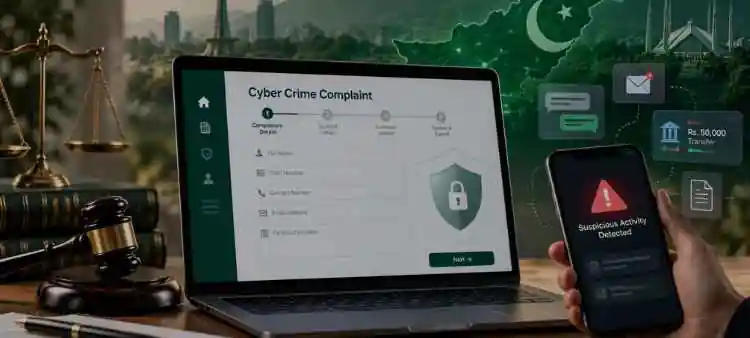
Filing an NCCIA Complaint
You can visit the official NCCIA complaint portal to check the current submission process.
Prepare a clear summary of the incident and the relevant evidence.
Depending on the circumstances, further verification or attendance at a reporting centre may be required.
You can also consult the NCCIA reporting centre directory for office information.
A complaint should focus on facts rather than guesses about the suspected person's identity or motives.
Is Cyber Blackmail Illegal Under Pakistani Law?
Cyber blackmail may involve offences under Pakistan's Prevention of Electronic Crimes Act, 2016, as amended, and other applicable criminal laws.
However, there is no single legal rule that covers every form of online blackmail.
PECA Section 21 Offences Against the Modesty of a Natural Person
Section 21 may be relevant to certain conduct involving sexually explicit material, manipulation of images, threats, or misuse of private content, where the statutory requirements are met.
The exact application depends on what the person did and the facts of the case.
PECA Section 24: Cyberstalking
Section 24 may be relevant to certain forms of repeated electronic contact, monitoring, or harassment when the legal elements of cyberstalking are satisfied.
Not every unwanted message automatically meets the requirements of this offence.
Other Applicable Laws
Depending on the circumstances, threats and demands may also raise issues under other criminal provisions.
The correct legal classification requires review of the conduct, available evidence, and current legislation.
For updated statutory materials, consult NCCIA's official PECA laws resource.
Important: A report of blackmail does not automatically prove that a crime occurred. The investigation and any prosecution must follow the applicable law.
What Evidence Do You Need to Report Cyber Blackmail?
Good evidence helps an investigator understand what happened.
The most useful records are often those that show the original communication, when it occurred, and what the person demanded.
| Evidence | Why it may matter |
|---|---|
| Original messages | Shows the words used in the threat |
| Account links | Helps identify the online account involved |
| Phone numbers | Connects communications to a contact identifier |
| Dates and times | Helps establish the sequence of events |
| Payment records | May show whether money was demanded or transferred |
| Emails | May contain sender and technical information |
| Account login alerts | May support an unauthorized access allegation |
| Published content links | Helps identify where material appeared |
Keep a separate note of facts you know and facts you only suspect.
Do not share sensitive intimate images publicly or circulate them among friends to prove that the threat exists.
If the matter involves a child, use the appropriate child protection and law enforcement channels rather than redistributing the material.
Can You Report an Anonymous Cyber Blackmailer?
Yes, you can report suspected cyber blackmail even if you do not know the person's real name.
A blackmailer may use a fake profile, temporary email address, or unknown phone number.
You can provide account links, usernames, messages, transaction records, and any other reliable information you already have.
However, an IP address, username, or phone number does not automatically prove who carried out the conduct.
Identifying the responsible person may require lawful investigation and technical evidence.
Avoid making public allegations against someone simply because you believe they are responsible.
What If You Have Already Paid the Blackmailer?
If you have already sent money, keep the transaction records.
Do not assume another payment will end the threats.
Contact your bank, card provider, or payment service promptly and explain that the payment may be connected to blackmail or fraud.
Ask what account-security measures, disputes, or recovery options are available.
Preserve the blackmail messages and payment instructions.
You can then report the suspected offence to the appropriate authority.
Recovering money is not guaranteed. The available remedies depend on the payment method, evidence, law, and circumstances.
Can Cyber Blackmail Happen Across Different Countries?
Yes. A person may receive threats in one country from someone believed to be in another.
For example, a Pakistani citizen living in the UAE may receive blackmail threats through a social media account connected to Pakistan.
A person living in the UK may discover that private material has been posted from an account whose operator is unknown.
These situations can involve questions about jurisdiction, digital evidence, platform policies, and international cooperation.
What Should Overseas Pakistanis Do?
Begin by preserving the evidence and protecting the affected accounts.
Report threats to the appropriate platform.
Check local law enforcement reporting procedures in your country of residence.
Where the incident has a genuine connection to Pakistan, you may also review the relevant NCCIA reporting requirements.
NCCIA's official guidance addresses reporting methods for people outside Pakistan. Additional identity verification, local coordination, or other procedural requirements may apply.
Do not assume that holding Pakistani citizenship alone determines which agency can investigate an incident.
For matters involving multiple countries, legal advice may help clarify which authorities and remedies are relevant.
Can You Take Legal Action Against Cyber Blackmail?
Legal action may be possible where the conduct meets the requirements of an offence or another legal remedy.
The available options depend on the country, the facts, and the evidence.
They may include:
Reporting suspected criminal conduct
Seeking investigation through the appropriate agency
Requesting platform removal of harmful content
Taking account-security measures
Exploring remedies through the courts where legally available
Seeking compensation or other relief where supported by law
The fact that a person has suffered distress does not, by itself, establish which legal remedy is available.
Where cyber blackmail overlaps with broader allegations of threats or coercion, readers can also review the general criminal complaint and FIR procedures.
What Happens After Reporting Cyber Blackmail?
After a complaint is submitted, the receiving authority may review the information and request further details.
If the matter falls within its jurisdiction and the legal requirements are met, additional inquiry or investigation steps may follow.
The agency may need to examine communications, account records, financial information, or other evidence.
An online report is not automatically an FIR, an arrest warrant, or a completed criminal case.
Likewise, a social media platform's decision to remove an account is separate from a criminal investigation.
The outcome depends on the facts, available evidence, legal powers, and applicable procedures.
How Can You Reduce the Risk of Future Online Blackmail?
No privacy measure can prevent every online threat. However, good digital security can reduce some risks.
Use strong, unique passwords for important accounts.
Enable two-factor authentication.
Review privacy settings on social media.
Avoid sharing account passwords or one-time codes.
Check unknown links before opening them.
Be careful when granting applications access to photographs, contacts, cameras, or cloud storage.
Keep important devices and applications updated.
If an account is compromised, use its official recovery process.
These steps help with online safety, but they do not replace reporting or legal action when a serious threat occurs.
Frequently Asked Questions About Cyber Blackmail
1. How can I get cyber blackmail help?
Preserve the threats, secure your accounts, stop sending money or additional private material, and report the incident through the relevant platform and law enforcement channels.
2. What should I do if someone is blackmailing me on WhatsApp?
Save the messages and the sender's number. Protect your account and report the contact through WhatsApp. If the threats may amount to a crime, report them to the appropriate authority.
3. Can I report cyber blackmail without knowing the person's name?
Yes. Provide the information you have, including usernames, profile links, messages, dates, and payment records. The authority will determine whether further investigation is possible.
4. Is cyber blackmail a crime in Pakistan?
Certain forms of online threats, coercion, image misuse, or cyberstalking may amount to offences under PECA or other applicable laws. The legal classification depends on the facts.
5. Can someone be punished for threatening to share private photos?
Potentially, depending on the conduct, evidence, and applicable law. Threats involving sexually explicit or manipulated material may engage specific legal provisions.
6. How do I report cyber blackmail to NCCIA?
Check the official NCCIA complaint portal or reporting centre guidance. Prepare accurate details and preserve relevant evidence. Follow any additional verification requirements.
7. Should I pay an online blackmailer?
Paying does not guarantee that the threats will stop. Avoid further payments made under pressure and consider contacting your bank or payment provider if you have already transferred money.
8. Can I stop private photos from being shared online?
Platform reporting tools and services such as StopNCII.org or Take It Down may help with qualifying images on participating platforms. They cannot guarantee removal from the entire internet.
9. What if the blackmailer lives in another country?
Preserve evidence, report the incident locally, and check whether another country's cybercrime authority also has jurisdiction. Cross-border investigations can involve additional legal steps.
10. Can fake or AI-generated images be used for blackmail?
Yes. Threats may involve manipulated or AI-generated material. Whether a criminal offence has occurred depends on the facts and applicable law.
11. Will reporting cyber blackmail keep my identity private?
You should ask the receiving authority about its confidentiality and data-handling procedures. Complete anonymity or confidentiality cannot be guaranteed in every investigation or court process.
12. Do I need a lawyer to report cyber blackmail?
Not always. Many people can make an initial report themselves. Legal assistance may be useful where the allegations are serious, the evidence is disputed, or the matter involves different countries.
Conclusion
Cyber blackmail can involve serious threats to privacy, safety, money, or reputation. A clear response starts with protecting your accounts, preserving reliable evidence, and reporting the conduct through appropriate channels.
People facing threats involving private images may also benefit from specialist content-protection tools, while criminal allegations should be assessed under the law of the relevant country.
No reporting method can guarantee an immediate result. Understanding the available options can help you take safer, more informed steps.
Legal Disclaimer
This article is provided for general legal information and public awareness only. It does not constitute legal advice, establish a lawyer-client relationship, or guarantee any particular legal outcome.
The legal consequences of online blackmail depend on the facts, available evidence, applicable jurisdiction, and current law. Government reporting procedures and platform policies may change.
Readers should verify current requirements through official sources and seek advice from a qualified legal professional where necessary.

Comments
No comments yet. Be the first to comment!
Leave a Comment