

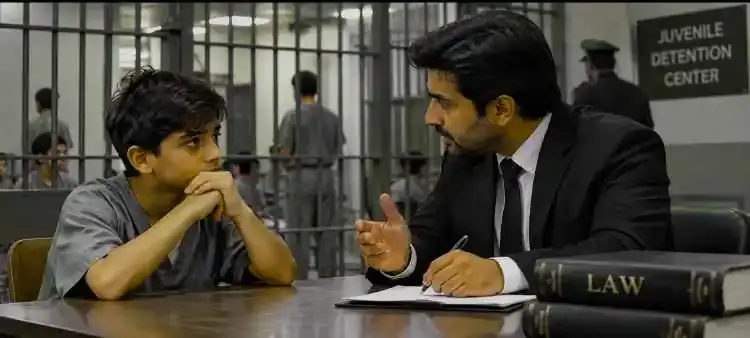
A child accused of a crime in Pakistan has special legal protections. The law focuses on fair treatment, legal assistance and rehabilitation rather than treating children exactly like adult offenders.
The Juvenile Justice System Act, 2018 provides the main legal framework for juvenile detention, bail and court proceedings. It applies to children under 18.
What Is a Juvenile Detention Center?
A juvenile detention center is a facility where a child may be held under the criminal justice process.
Pakistani law uses two specific terms:
Observation Home: A place for temporary custody during investigation or related proceedings.
Juvenile Rehabilitation Centre: A facility intended for rehabilitation, education and training under the applicable legal framework.
Section 20 of the Juvenile Justice System Act addresses the establishment and certification of these facilities.
Can Police Keep a Juvenile in Jail?
Section 5 of the Act requires an arrested juvenile to be kept in an observation home. It also requires the police to inform the guardian, where available, and notify the probation officer.
The child's custody must follow juvenile-specific legal safeguards.
Families concerned about detention or police procedure can seek juvenile justice legal assistance in Pakistan.
What Rights Does a Juvenile Have?
Children accused of crimes have important legal rights, including:
Legal assistance and fair treatment.
Age determination when age is disputed.
Bail consideration under special juvenile provisions.
Protection of identity.
Proceedings before the appropriate Juvenile Court.
Section 8 explains age determination, while Section 13 protects a juvenile's identity, subject to statutory exceptions.
The Asian Development Bank's overview of Pakistan's juvenile justice law also explains key protections and the rehabilitation framework.
Can a Juvenile Get Bail in Pakistan?
Yes. Section 6 of the Act provides special bail rules for juveniles.
Children accused of minor or major offences receive particular bail protections. Different considerations can apply when a juvenile over 16 is accused of a heinous offence.
Bail depends on the offence, the child's age and the applicable statutory conditions.
For a broader explanation of bail proceedings, see pre-arrest and post-arrest bail in Pakistan. Juvenile cases must also be assessed under the special Juvenile Justice System Act.
What Happens in a Juvenile Rehabilitation Centre?
A Juvenile Rehabilitation Centre is intended to support a child's development and reintegration into society.
The legal framework provides for education, vocational training and rehabilitation. Actual services depend on the facility and available arrangements.
Rehabilitation aims to help children rebuild their lives while remaining within the lawful juvenile justice process.
Can a Juvenile Avoid Detention?
Some juvenile cases qualify for diversion, an alternative to completing ordinary criminal proceedings.
Section 9 allows diversion in eligible cases, subject to age, offence classification, consent and other legal conditions.
Possible measures include apology, restitution, community service or rehabilitation-related arrangements.
Diversion does not mean every criminal allegation will be dismissed.
What Happens in Juvenile Court?
The Juvenile Court considers the case under special procedures designed for children.
Proceedings may involve age determination, investigation records, bail applications, evidence, defence submissions and appropriate legal orders.
Section 4 gives Juvenile Courts jurisdiction over juvenile criminal cases.
For a broader explanation of how criminal cases proceed, read our guide to the criminal justice system in Pakistan.
Can a Juvenile Be Sentenced to Death?
No. Section 16 prohibits sentencing a person to death for an offence committed while they were a juvenile.
The Act also places restrictions on certain other punishments and treatment.
These protections are part of Pakistan's child-specific criminal justice framework.
What Should Parents Do After a Child Is Arrested?
Parents or guardians should take these practical steps:
Confirm the child's location and custody status.
Obtain the FIR or available police documents.
Keep birth certificates, B-Forms and school records ready.
Contact a lawyer familiar with juvenile criminal law.
Ask about bail, age determination and lawful alternatives to detention.
Parents can also read the Juvenile Justice System Act with amendments published by the Sindh Judicial Academy.
When Should Families Contact a Juvenile Justice Lawyer?
Legal advice becomes particularly important when a child is arrested, age is disputed, bail is refused or Juvenile Court proceedings begin.
A lawyer can review the documents, identify applicable protections and advise on lawful remedies.
A.A. Dewan & Co. provides juvenile bail, age determination and Juvenile Court representation for families dealing with juvenile criminal matters in Pakistan.
Frequently Asked Questions
What age is considered juvenile in Pakistan?
A person under 18 is considered a child for the purposes of the Juvenile Justice System Act, 2018.
Is a juvenile detention center the same as an adult prison?
No. The law provides a distinct framework for juvenile observation homes and rehabilitation centres.
Can parents visit a child in juvenile detention?
Visitation depends on applicable rules, facility arrangements and any relevant court directions.
Can a juvenile be released on bail?
Yes. Section 6 provides special bail protections, subject to the circumstances and statutory requirements.
What is the purpose of juvenile rehabilitation?
Rehabilitation aims to support education, development and reintegration into society.
Conclusion
Juvenile detention in Pakistan is governed by laws intended to protect children while ensuring lawful criminal proceedings.
Parents should understand the child's rights, bail options and rehabilitation procedures. Early legal advice can help protect those rights.
Legal information notice: This article provides general information about Pakistani juvenile law. It is not a substitute for advice on a specific case. Statutory provisions and amendments should be checked against the law applicable to the individual proceedings.
Comments
No comments yet. Be the first to comment!
Leave a Comment