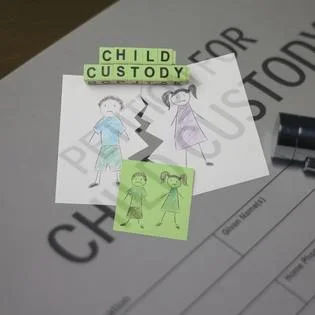
Child Custody & Guardian
Looking for experienced Child Custody and Guardianship, or child support lawyer?
View Service →

A.A. Dewan & Co. assists with dowry (jahez) recovery, dower claims, Family Court procedure, evidence and Pakistan-based legal coordination for overseas clients.

Explore our related legal services for this practice area.
Looking for experienced Child Custody and Guardianship, or child support lawyer?
View Service →
When it comes to recovering dowry articles, legal action can be a vital step, especially in cases where the return of these items is disputed.
View Service →
A.A. Dewan & Co., provides legally valid and Shariah-compliant court marriage services in accordance with Shariah Muhammadi and the laws of Pakistan.
View Service →
Child custody and maintenance in Muslim family law are governed by principles that prioritize the well-being and welfare of the child.
View Service →
A dowry, or “jahez” in Urdu, is money, gifts, or items like furniture, clothes, or gold that the bride’s family gives to the groom’s family during a wedding in Pakistan.
View Service →
The adoption process begins with a consultation with a family law lawyer, adoption agency, or the social welfare department.
View Service →
In Pakistan, the Maintenance of Wife in Islam is both a legal and religious right. According to Islamic law and the Muslim Family Laws Ordinance, 1961, a husband must support his wife financially.
View Service →
Affordable Divorce Lawyer Services provide expert legal guidance for a smooth and stress-free marriage dissolution.
View Service →Quick answer: Dowry and dower are not the same legal concept. The Dowry and Bridal Gifts (Restriction) Act, 1976 defines dowry separately from bridal gifts and excludes Mehr from the definition of bridal gift. Section 5 states that qualifying dowry, bridal gifts and presents given to the bride vest absolutely in the bride.
In family disputes, the words “dowry,” “jahez,” “bridal gifts,” “personal belongings” and “dower” are often used interchangeably. That can create confusion. A proper legal assessment separates the items or monetary claim involved, identifies the evidence available, and then determines the appropriate remedy.
The federal Dowry and Bridal Gifts (Restriction) Act, 1976 contains provisions dealing with definitions, restrictions and the vesting of dowry and bridal gifts. The Family Courts Act, 1964 provides the family-court framework in which dowry and dower matters can arise.
For Muslim dower, the Muslim Family Laws Ordinance, 1961 is also relevant. Section 10 addresses dower where the mode of payment is not specified in the Nikah Nama or marriage contract.
Important: The exact remedy depends on the nature of the property or claim, the province or territory, the pleadings, available evidence, prior orders and the wider family dispute. This page provides general Pakistan-law information, not a case-specific legal opinion.
The first step in a dowry dispute is to identify what is actually being claimed. These categories can have different legal treatment.
| Legal Term | General Meaning |
|---|---|
| Dowry | Property given before, at or after marriage by the bride’s parents to the bride in connection with the marriage, as defined by the 1976 Act. |
| Bridal Gifts | Property given in connection with the marriage by the bridegroom or his parents to the bride; the Act’s definition excludes Mehr. |
| Present | A marriage-related gift that is not classified as dowry or bridal gift under the Act’s definitions. |
| Dower / Mehr | A marital financial obligation that is distinct from dowry and is addressed separately under Muslim family-law rules. |
The classification matters because the legal basis, evidence and remedy may differ. If the dispute involves both property and dower, treating everything as one category can make the claim unnecessarily unclear.
The official Pakistan Code text defines dowry, bridal gifts and presents and provides a statutory framework for restrictions connected with marriage. It also states in section 5 that property given as dowry or bridal gifts, and property given to the bride as a present, vests absolutely in the bride.
The Act defines dowry by reference to property given to the bride by her parents in connection with the marriage.
The Act’s definition of bridal gift expressly excludes Mehr, so dower should not simply be treated as another name for dowry.
Section 5 states that qualifying dowry, bridal gifts and presents given to the bride vest absolutely in the bride.
The Act contains its own complaint and offence provisions, while the Family Courts Act separately identifies dowry among scheduled family matters.
Read the official Dowry and Bridal Gifts (Restriction) Act, 1976 in the Legal Resources section below before relying on summaries found elsewhere online.
The Schedule to the Family Courts Act, 1964 includes dower, dowry, and the personal property and belongings of a wife and child living with his or her mother among matters assigned to the family-court framework. The precise pleading, jurisdiction and relief still depend on the facts of the case.
Separate dowry articles, personal belongings, bridal gifts, dower and any other monetary or property claim.
Prepare item lists, receipts, photographs, messages, witnesses, valuations and other records that support ownership or entitlement.
The appropriate legal route depends on the claim, jurisdiction, marital proceedings and the relief actually sought.
Relevant facts, documents and supporting material should be organised clearly rather than relying on a broad or unsupported list.
Depending on the case, the process can involve service, replies, evidence, witnesses, arguments and court orders.
Connected proceedings, settlement discussions, enforcement questions or appeals may require additional legal work.
Do not confuse limitation with the Dowry Act’s offence procedure: the 1976 Act contains a three-month period for a written complaint relating to an offence under that Act. That does not establish one universal deadline for every dowry, personal-property or dower recovery claim.
See the official Family Courts Act, 1964 in the Legal Resources section below for the statutory framework.
A recovery claim is stronger when the client can clearly identify the property, explain how it was connected to the marriage, and produce evidence supporting the claim. A long list without supporting proof can create avoidable disputes. For a page focused specifically on recovery of dowry articles, see our dedicated service guide.
Practical point: Preserve original records and make a consistent inventory before filing. Do not manufacture, alter or exaggerate evidence. If an item’s ownership or value is disputed, the evidence should be reviewed before it is included in a formal claim.
Dower, or Mehr, is a separate marital obligation. It should not automatically be merged with a dowry-article recovery claim simply because both arise from the same marriage.
Section 10 of the Muslim Family Laws Ordinance, 1961 provides that where the mode of payment of dower is not specified in the Nikah Nama or marriage contract, the entire amount of dower is prescribed to be payable on demand. The actual wording of the Nikah Nama and the facts of the marriage should therefore be reviewed before deciding how a dower claim should be presented.
If the dispute also involves divorce, khula, maintenance or other marital relief, the claims may need to be coordinated within the applicable Family Court procedure. See our Marriage Dissolution and Maintenance of Wife pages for related matters.
The exact document list depends on the claim. Preparing the file early helps identify missing evidence before pleadings or court proceedings begin.
Nikah Nama, marriage registration records and documents showing the marital relationship.
CNIC, NICOP, passport or other identity records relevant to the parties and witnesses.
Item lists, receipts, invoices, photographs, videos, valuations and proof of possession or purchase.
Notices, settlement attempts, previous pleadings, orders and other records connected with the dispute.
Living outside Pakistan does not remove the need to deal with a Pakistan-based family dispute properly. Overseas clients may face additional practical problems involving document access, witnesses, possession of household articles, communication with relatives, court appearances and coordination with counsel in Pakistan.
A.A. Dewan & Co. assists overseas Pakistanis with Pakistan-law family matters, including document review, legal drafting, case coordination and representation where the applicable procedure permits. The practical route depends on the court, the claim, evidence and any requirement for personal attendance.
Our broader Family Law for Overseas Pakistanis service may also be relevant where the dispute includes divorce, maintenance, custody, guardianship or other connected issues.
For an overseas case: keep a digital copy of the Nikah Nama, identity documents, item lists, receipts, photographs and previous legal correspondence available for the initial review.
Use primary legal sources where possible. The following official Pakistan Code materials are directly relevant to the issues discussed on this page:
Laws and procedural requirements can be amended or applied differently depending on jurisdiction and facts. Check the current official text and obtain case-specific advice before relying on a legal summary.
Support for dowry, dower, marital-property and related Family Court disputes.
Clear attention to documents, item lists, ownership issues, witnesses and supporting records.
Pakistan-based legal coordination for clients managing family disputes from abroad.
Where relevant, the case can be considered alongside dissolution, maintenance, custody or other family-law issues.
Explore our wider Family Law Services in Pakistan for related legal matters.
The Dowry and Bridal Gifts (Restriction) Act, 1976 defines dowry as property given before, at or after marriage, directly or indirectly, to the bride by her parents in connection with the marriage. The Act separately defines bridal gifts and presents.
No. They are legally distinct concepts. The 1976 Dowry and Bridal Gifts (Restriction) Act expressly excludes Mehr from its definition of bridal gift, while dower is addressed separately under the Muslim Family Laws Ordinance, 1961.
Section 5 of the Dowry and Bridal Gifts (Restriction) Act, 1976 states that property given as dowry or bridal gifts, and property given to the bride as a present, vests absolutely in the bride. The facts and legal characterization of particular items should still be reviewed before a claim is filed.
Dowry is included in the Schedule to the Family Courts Act, 1964, and the Act also addresses a wife’s personal property and belongings. Whether a particular claim, item or remedy is available depends on the evidence, pleadings, jurisdiction and facts of the case.
Useful evidence may include the Nikah Nama, CNIC or other identity records, item lists, receipts, invoices, photographs, videos, messages, valuation material, witness details, prior notices and relevant court records. Not every case will require every document.
Yes, Pakistan-based family disputes can be managed with legal coordination and representation where the applicable procedure permits it. The practical route depends on the client’s location, the court involved, available documents, evidence and any need for personal appearance.
They can be connected with dissolution proceedings. Section 7 of the Family Courts Act, 1964 expressly addresses the inclusion of claims relating to dowry, maintenance, dower and personal property in a plaint for dissolution of marriage, subject to the applicable facts and procedure.
No. Different legal claims can have different limitation or procedural rules. The Dowry and Bridal Gifts (Restriction) Act also contains a separate three-month complaint period for offences under that Act. That provision should not be treated as a universal limitation period for every civil or family recovery claim.
There is no responsible universal timeline. Duration can depend on the court, pleadings, evidence, witnesses, service, adjournments, connected proceedings and whether the matter is contested. A lawyer can give a more useful assessment after reviewing the facts and documents.
There is no single fee for every matter. Professional fees and case expenses can vary according to the court, complexity, number of claims, document work, hearings, evidence and whether the client is based overseas.
If you are dealing with recovery of dowry articles, a dower claim, disputed marital property, or a related Family Court matter in Pakistan, begin with the documents and facts. A focused review can help identify the correct legal issue, evidence and procedural route before unnecessary action is taken.
A.A. Dewan & Co. assists local clients, overseas Pakistanis and international clients with Pakistan-based family-law matters.
Dowry and dower disputes can overlap with divorce, maintenance, custody, guardianship and other family-law matters. Use the relevant service page for the connected issue.
Broader legal support for family disputes, court proceedings, maintenance and marriage-related matters.
Guidance on Nikah documentation, marriage registration and related legal requirements.
Legal guidance for divorce, khula, dissolution and connected marital disputes.
Support for custody, guardianship, visitation and child-welfare matters.
Legal support for child-maintenance claims and related Family Court proceedings.
Guidance on spousal maintenance rights and related family-law claims.
Pakistan-law guidance on guardianship and adoption-related family proceedings.
Pakistan-based legal coordination for clients managing family matters from abroad.
Get knowledge on business, IPR, employment, family, banking, and criminal laws in Pakistan.
No published articles found.
Have questions or need legal advice? Our Law Firm expert team is ready to assist you.
“A trusted consulting Law Firm is providing expert solutions with strategic insights.”
Discuss your legal needs with our experienced team and explore tailored solutions.