

Real Estate Lawyers in Pakistan – Property Investment Legal Services
A.A. Dewan & Co. assists property buyers, investors, developers, companies and overseas Pakistanis with title and document review, property due diligence, sale agreements, leases, joint ventures, corporate structures and transaction-risk planning in Pakistan.
- Property Title & Document Review
- Due Diligence Before Payment
- Sale, Lease & JV Agreements
- Overseas Investor Support

Corporate & Business Law Services
Explore our related legal services for this practice area.
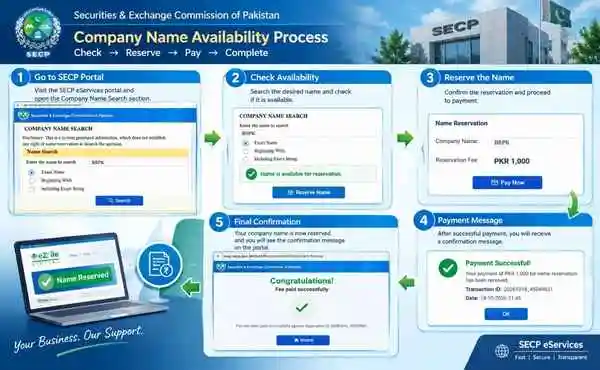
Company Name Availability
Before you register a company, choose a name that is distinctive, appropriate for your business and ready for SECP review.
View Service →
Company Registration from SECP
Incorporation is a legal setup decision, not only a portal submission. Our role is to connect the registration filing with the ownership, business objects, governance, tax coordination and compliance issues that matter after the certificate is issued.
View Service →
Corporate Legal Services
We assist with Pakistan-law matters for foreign companies, foreign investors, overseas Pakistanis and cross-border businesses.
View Service →
LLP Registration Pakistan
LLP registration in Pakistan with SECP: name reservation, partners, designated partner, LLP agreement, LEAP filing, NTN and overseas business support.
View Service →
NTN Registration in Pakistan
NTN registration in Pakistan through FBR Iris for individuals, companies and AOPs. Get NTN, verification, company tax setup and overseas support.
View Service →
SMC Registration
Register a Single Member Company in Pakistan with SECP. Get help with name reservation, nominee details, MOA/AOA, eZfile incorporation, NTN and compliance.
View Service →
Real Estate Investment
Our experienced attorneys provide comprehensive services tailored to your specific needs, guiding you through every stage of the real estate investment.
View Service →
Memorandum of Association
A corporate lawyer can help draft a solid MOA that meets legal requirements and supports smooth company operations.
View Service →
Company Registration Procedure (Full Guide)
The company registration process can feel overwhelming, but it’s a crucial step in launching your business.
View Service →
Company Closing
A corporate lawyer plays a key role in guiding the company through each step of the Company Closing Procedure.
View Service →
Trade Union and Labour Law
Forming a trade or labour union in Pakistan is an important way for workers to unite, protect their rights, and push for improved working conditions.
View Service →Real Estate Legal Services in Pakistan
Property investment involves more than agreeing a price. The legal position can depend on the seller’s authority, the type of property, the chain of documents, the relevant land, development or housing authority, possession, approvals, dues, contractual conditions and the method by which the transfer will be completed or recorded.
Our real estate legal services focus on identifying these issues before a client commits substantial funds or signs documents that are difficult to unwind. The scope can include residential, commercial, development, lease, joint-venture and company-held property transactions.
Important: Property records and transfer procedures are not identical across Pakistan. The documents and verification route depend on the province, city, development authority, housing society, cantonment, revenue record or project involved.
Who Should Consider Property Legal Due Diligence?
- Individuals buying residential or commercial property
- Investors making a high-value or staged-payment purchase
- Overseas Pakistanis investing or completing transactions from abroad
- Businesses acquiring offices, warehouses, land or investment property
- Developers and landowners entering development or joint-venture arrangements
- Landlords and commercial tenants negotiating long-term leases
- Existing owners reviewing a title, transfer, possession or contractual dispute
Property Due Diligence and Title Review in Pakistan
The purpose of legal due diligence is to understand what rights the seller or transferor appears able to transfer, whether the available records are consistent, and what legal or documentary risks should be resolved before payment or completion.
Title and Ownership Review
- Seller or transferor identity and legal authority
- Available title, allotment, lease, transfer or revenue documents
- Prior transfer history and chain of documents where available
- Authority, society, project or land-record information relevant to the property
- Encumbrance, charge, mortgage or third-party interest indicators where records permit review
- Possession, dues, approvals and documentary inconsistencies
What a Due Diligence Review Should Tell You
A useful review should not merely list documents. It should identify material gaps, explain why they matter, distinguish issues that can be cured before completion from issues that may justify renegotiation or withdrawal, and recommend conditions that should appear in the transaction documents.
No absolute title guarantee: A legal review is based on the documents, confirmations and records that can reasonably be obtained and checked. Hidden claims, forged records, incomplete public data or facts withheld by a party can affect the position, so due diligence is a risk-assessment process rather than an unconditional guarantee.
Documents Commonly Reviewed Before Buying Property
The exact checklist varies by property type and authority. Depending on the transaction, the file may include:
- Sale deed, conveyance, lease deed, transfer deed or other title instrument where applicable
- Allotment, allocation, booking, possession or transfer letters
- Mutation, revenue or land-record documents where applicable
- Authority, society or project transfer records and payment receipts
- Approvals, NOCs, sanctioned plans or project documents where relevant
- Tax, development, utility, maintenance or other dues information
- Powers of attorney and authority documents
- Corporate resolutions and authorization where a company is a party
- Draft sale, purchase, lease or joint-venture agreement
Property Sale Agreements and Payment Protection
A sale or purchase agreement should do more than state the property and price. It should allocate documentary responsibilities and define what must happen before the buyer is required to release substantial funds.
Key Terms to Review Before Signing
- Property description and documents forming part of the transaction
- Purchase price, token, advance and payment milestones
- Conditions that must be satisfied before further payment
- Seller warranties about ownership, authority, disputes and encumbrances
- Possession and completion requirements
- Transfer, registration or authority-specific completion steps
- Taxes, fees, dues and cost allocation
- Default, refund, termination, indemnity and dispute provisions
Practical point: Contract review is most useful before a large token or advance is paid. Once substantial funds have moved, the buyer may have less negotiating leverage if an important document or approval is missing.
Sale Agreement vs Final Property Transfer
A contract to purchase property and the legal or administrative step that completes or records the transfer are not necessarily the same thing. Depending on the property, completion may involve a registered instrument, mutation, authority or society transfer, lease assignment, allotment transfer, possession documentation or another process.
The transaction should therefore be planned around the actual property and the authority responsible for recognizing the transfer, rather than relying on a generic agreement alone.
For general federal property-law reference, the Transfer of Property Act, 1882 on Pakistan Code is an official source, but provincial laws, authority rules and the facts of the property can also be relevant.
Housing Society, Development Authority and Project Due Diligence
Project-based and authority-controlled property can involve risks that are different from an ordinary transfer between two owners. The buyer may need to review the project’s legal status, the developer’s authority, allotment terms, transfer restrictions, possession position and approvals relevant to the project.
- Confirm which authority, society or project entity controls the transfer
- Review the seller’s allotment, lease or membership rights
- Check transfer restrictions, dues and authority requirements
- Review project approvals or NOCs where relevant and available
- Compare marketing or commercial promises with the written transaction documents
Commercial Lease and Tenancy Agreements
Commercial leases can create long-term financial and operational obligations. The agreement should clearly address rent, escalation, deposit, use of premises, maintenance, utilities, fit-out, renewal, assignment, default, possession and termination.
- Lease drafting and review for landlords or tenants
- Security deposit and payment protection
- Rent escalation, renewal and break clauses
- Maintenance, fit-out and operational responsibility
- Default, termination, possession and dispute provisions
Property Investment Through a Company, SPV or Joint Venture
Some investors acquire, hold or develop property through a company or a special-purpose structure. Others enter a joint venture with a landowner, developer or investment partner. These structures should align the property documents with ownership, funding, control, profit allocation, exit and corporate compliance.
Company or SPV Structure
Before forming a company for a property transaction, review the proposed activity, shareholders, directors, financing, tax position and any authority-specific restrictions. Our Private Limited Company Registration and Corporate Legal Services in Pakistan pages cover the corporate side in more detail.
Joint Venture Documentation
- Land or capital contribution obligations
- Project control and decision-making rights
- Development milestones and funding responsibilities
- Revenue or profit-sharing mechanics
- Default, deadlock, transfer and exit provisions
- Dispute-resolution and enforcement planning
Property Investment in Pakistan for Overseas Pakistanis
Overseas investors often cannot personally inspect every record, attend every meeting or supervise execution. That makes independent document review, authority verification and payment-control planning particularly important before funds are sent or documents are signed.
- Review property and seller documents before remitting substantial funds
- Confirm who is authorized to negotiate, receive money and execute documents
- Review powers of attorney or other authority documents where remote representation is required
- Plan the payment trail, banking documentation and completion process
- Arrange document execution around the requirements of the relevant authority and transaction
For wider legal support from abroad, see our Overseas Pakistani Legal Services and Legal Document Preparation for Overseas Pakistanis.
FBR Property Valuation and Tax Planning
Property transactions can have tax consequences for buyers, sellers, individuals and companies. Tax rates and treatment can change through Finance Acts and other amendments, so a transaction should be reviewed under the law in force when it is being completed rather than relying on an old fixed-rate summary.
FBR publishes valuation information for immovable property in multiple cities. These valuation tables are an official tax reference, but they are not a substitute for market valuation, legal title review or the separate values and duties that may apply under provincial or local rules.
Official references: FBR Valuation of Immovable Properties and FBR Income Tax Registration .
REIT Investment Is Different from an Ordinary Property Purchase
A Real Estate Investment Trust is a regulated investment structure and should not be confused with directly purchasing a house, plot, office, shop or development interest. REIT schemes and REIT Management Companies operate under a specialized SECP framework.
SECP’s current published Real Estate Investment Trust Regulations, 2022 are updated through January 1, 2026. Investors or sponsors considering a regulated REIT structure should review the current regulations and licensing framework separately from ordinary property due diligence.
Property Disputes, Defaults and Pre-Litigation Review
Property disputes can arise from title defects, possession, delayed completion, payment defaults, unauthorized transfers, defective authority, developer obligations, lease breaches or inconsistent documents. The first step should normally be to organize the paper trail and identify the contractual and property rights involved.
- Review transaction documents and chronology
- Identify contractual notices, defaults and available remedies
- Assess evidence before formal escalation
- Consider negotiation or settlement where commercially appropriate
- Prepare for litigation or other proceedings where necessary
Our Property Legal Review Process
1. Transaction and Property Review
We identify the property type, transaction stage, authority involved, parties, payment position and the client’s commercial objective.
2. Document Checklist
We identify the documents and confirmations needed for the particular property and transaction rather than using one generic checklist for every file.
3. Legal Due Diligence
Available title, transfer, authority, contractual and supporting records are reviewed for inconsistencies, gaps and material risk.
4. Risk and Condition Report
Material issues are identified together with the documents, confirmations or contractual protections that should be obtained before payment or completion.
5. Agreement and Completion Support
Where required, the sale, purchase, lease, joint-venture or related documents are drafted or reviewed and the completion steps are aligned with the agreed protections.
Common Property Investment Red Flags
- Pressure to pay before key ownership or authority documents are produced
- Seller identity that does not match the available property record
- Transaction being conducted only through an unverified representative or power of attorney
- Gaps or inconsistencies in prior transfer documents
- Unclear possession status or third-party occupation
- Outstanding dues, transfer restrictions or missing approvals
- Project marketing promises that do not appear in the written agreement
- Large payments without clear refund, default or completion protection
- Corporate seller or buyer acting without proper authorization
Official Property, Tax and Investment Resources
The correct official source depends on the property and jurisdiction. Federal references that may be relevant include:
- Pakistan Code – Transfer of Property Act, 1882
- FBR – Valuation of Immovable Properties
- FBR – Income Tax Registration
- FBR Iris
- SECP – Current Published REIT Regulations
Property-specific verification may also require records from the relevant provincial land authority, development authority, cantonment, housing society, registrar or project office. Those sources vary by property.
Real Estate Legal Support Before You Commit Funds
The objective is not to produce a generic document checklist. It is to connect the available property records, seller authority, contract terms, payment structure and completion process so the client can make a better-informed decision before taking on the transaction risk.
- Property-specific document and risk review
- Title and transfer-document assessment
- Sale, purchase, lease and joint-venture agreement support
- Company and SPV structuring coordination where relevant
- Remote support for overseas Pakistanis
- Pre-litigation review when a transaction has already gone wrong
Planning to buy, sell, invest, lease or enter a property joint venture? Share the property type, location, transaction stage and the documents currently available for an initial legal review.
FAQs About Real Estate Legal Services in Pakistan
Common questions about property due diligence, title review, sale agreements, overseas investment, company-held property and transaction timelines.
What does a real estate lawyer check before a property purchase in Pakistan?
The review depends on the property and authority involved, but it can include the seller’s identity and authority, available ownership and transfer records, allotment or lease documents, prior transfers, encumbrance or charge information where available, dues, approvals, possession terms, litigation risk, and the proposed sale or transfer documents.
What documents are usually reviewed in property due diligence?
Documents may include title or transfer instruments, allotment or lease papers, mutation or revenue records where applicable, authority or society records, payment receipts, possession documents, approvals or NOCs, tax or dues records, powers of attorney, corporate authorizations and the draft sale or purchase agreement. The exact list varies by property type and jurisdiction.
Can a lawyer guarantee that a property has a completely clear title?
Legal due diligence can identify risks from the documents and records that are available and verifiable, but it should not be treated as an absolute guarantee that no hidden claim or defect can ever exist. The strength of the conclusion depends on the quality of the records, the relevant authority and the facts of the transaction.
Should the sale agreement be reviewed before paying token or advance money?
Yes. The payment structure, refund rights, title conditions, completion date, possession, defaults, approvals and documentary obligations should ideally be reviewed before a substantial token or advance is paid because negotiating leverage can reduce after funds have been committed.
What is the difference between a sale agreement and final property transfer?
A sale or purchase agreement usually records the parties’ contractual obligations and the conditions for completion. Final transfer, registration, mutation, allotment transfer or another authority-specific step may still be required to complete or record the transaction. The exact process depends on the property and the authority governing it.
Can overseas Pakistanis invest in property in Pakistan from abroad?
Overseas Pakistanis can invest in Pakistan property subject to the requirements that apply to the particular property, authority, payment method and transaction. Remote transactions may also require carefully prepared authority documents, identity verification, banking arrangements and local execution support.
Can property be purchased or held through a company in Pakistan?
A company can be used for some property acquisition, holding, development or investment structures, depending on the commercial purpose, company objects, financing, tax position, regulatory approvals and the rules of the relevant property authority. The structure should be reviewed before incorporation or purchase.
Is a REIT the same as directly buying property in Pakistan?
No. A direct property purchase is different from investing through a regulated Real Estate Investment Trust structure. REIT schemes and REIT Management Companies are subject to a separate SECP regulatory framework and should not be confused with an ordinary purchase, lease or private joint venture.
How much does property legal due diligence cost in Pakistan?
There is no single fee for every transaction. Cost depends on the property type and value, location, number of documents, authority or society involved, corporate or overseas parties, searches required, contract drafting and the complexity of the risks identified.
How long does property due diligence take in Pakistan?
Timing depends on document completeness, the relevant land or development authority, society or project records, the number of prior transfers, the need for confirmations or searches and whether legal or documentary issues are discovered. A fixed timeline should not be promised before the file is reviewed.
This page provides general legal information. Property law, authority procedures, tax rules, valuation tables, transfer requirements and project records can change. The current official position and the documents of the particular property should be reviewed before a transaction is completed.