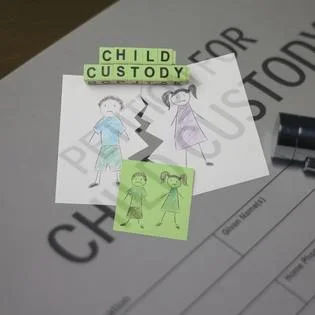
Child Custody & Guardian
Looking for experienced Child Custody and Guardianship, or child support lawyer?
View Service →

A.A. Dewan & Co. assists clients with talaq, khula and marriage dissolution in Pakistan, including Family Court procedure, Union Council requirements, documents and Pakistan-based support for overseas Pakistanis.

Explore our related legal services for this practice area.
Looking for experienced Child Custody and Guardianship, or child support lawyer?
View Service →
When it comes to recovering dowry articles, legal action can be a vital step, especially in cases where the return of these items is disputed.
View Service →
A.A. Dewan & Co., provides legally valid and Shariah-compliant court marriage services in accordance with Shariah Muhammadi and the laws of Pakistan.
View Service →
Child custody and maintenance in Muslim family law are governed by principles that prioritize the well-being and welfare of the child.
View Service →
A dowry, or “jahez” in Urdu, is money, gifts, or items like furniture, clothes, or gold that the bride’s family gives to the groom’s family during a wedding in Pakistan.
View Service →
The adoption process begins with a consultation with a family law lawyer, adoption agency, or the social welfare department.
View Service →
In Pakistan, the Maintenance of Wife in Islam is both a legal and religious right. According to Islamic law and the Muslim Family Laws Ordinance, 1961, a husband must support his wife financially.
View Service →
Affordable Divorce Lawyer Services provide expert legal guidance for a smooth and stress-free marriage dissolution.
View Service →Marriage dissolution in Pakistan does not follow one identical procedure in every case. The appropriate route depends on the circumstances, the type of marriage, the person seeking dissolution and the applicable law. Muslim family-law matters can involve talaq, khula or judicial dissolution, while different statutory frameworks may apply to other marriages.
A dissolution matter can also involve wife maintenance, child maintenance, child custody and guardianship, dower, dowry articles and related documentation.
The first step is identifying the correct legal route rather than treating every divorce matter as the same process.
Section 7 of the Muslim Family Laws Ordinance, 1961 sets out written-notice, reconciliation and statutory-period requirements where that provision applies.
Khula is commonly pursued through Family Court proceedings by a wife. The petition, evidence and connected claims depend on the circumstances.
The Dissolution of Muslim Marriages Act, 1939 provides specified grounds on which a Muslim woman may seek a decree for dissolution.
Different rules can apply to non-Muslim marriages. The applicable personal law and statute should be identified before proceedings begin.
Where Section 7 of the Muslim Family Laws Ordinance, 1961 applies, the husband must give the Chairman written notice of the pronouncement of talaq and supply a copy to the wife. The law provides a statutory period before talaq becomes effective, subject to its provisions, and requires the Chairman to constitute an Arbitration Council for reconciliation within the prescribed period.
| Stage | What it involves |
|---|---|
| Pronouncement | Record the relevant facts and date accurately. |
| Written Notice | Give the required notice to the Chairman and provide a copy to the wife. |
| Arbitration Council | The statutory reconciliation mechanism may be initiated by the Chairman. |
| 90-Day Period | Section 7 provides a 90-day period from delivery of notice, subject to the statutory exceptions. |
| Records | Keep copies of notices, acknowledgements and relevant Union Council records. |
Primary legal reference: Section 7, Muslim Family Laws Ordinance, 1961.
Khula is commonly pursued through the Family Court. The case generally requires assessment of the marriage record and circumstances, preparation of the appropriate pleading, filing before the court with jurisdiction, service and the required court proceedings. Any connected maintenance, custody, dower or dowry issue should be identified separately.
Review the marriage record, facts, children, financial issues and available documents.
Prepare the required court documents and identify connected claims.
File before the court having jurisdiction over the matter.
Manage service, appearances and reconciliation-related stages where applicable.
The court determines the matter under the applicable law and evidence.
Address remaining documentation and related family-law matters.
The Dissolution of Muslim Marriages Act, 1939 contains specified grounds for a Muslim woman seeking dissolution by decree, including certain circumstances relating to non-maintenance, imprisonment, failure to perform marital obligations and cruelty, subject to the statutory conditions and exceptions.
Judicial dissolution should not automatically be treated as identical to khula. The facts and available statutory grounds should be reviewed before selecting the route.
The Family Courts Act, 1964 places dissolution of marriage, including khula, within Family Court jurisdiction. Its Schedule also covers dower, maintenance, custody, visitation, guardianship, dowry and specified personal-property matters.
Prepare the correct pleading, documents and jurisdictional information.
Manage notices and participation through the required court stages.
Marriage, identity, financial and child-related records may become relevant.
Maintenance, custody, dower and dowry issues may require separate or connected relief.
The exact requirements vary by route and case. Commonly relevant records may include:
Document requirements should be confirmed against the particular legal route before filing or submitting a notice.
Where Section 7 applies, the written notice to the Chairman and the statutory reconciliation process are important parts of the talaq framework. The handling of notices, acknowledgements and records should be checked against the facts and applicable local procedure.
A Union Council talaq process should not be presented as the same thing as a Family Court khula case. They are different legal routes.
Ending a marriage may not resolve every family-law issue. Related matters can include:
Financial-support issues require assessment under the applicable law and facts.
Children's financial support is a distinct issue from marriage dissolution.
Residence, care and parental access may require separate legal attention.
Outstanding dower and recovery of dowry articles can create separate legal questions.
Overseas Pakistanis may need Pakistan-based legal and administrative assistance when a marriage or family-law matter is governed by Pakistani law. Practical issues can include document availability, notices, court procedure, authority coordination and the handling of records while a client is living abroad.
Our team assists with Pakistan-based family-law matters, including case assessment, document review, drafting, coordination and representation where appropriate. The scope depends on the legal route, court or authority and individual circumstances.
International client support: If you live in the UK, UAE, Saudi Arabia, Canada, the USA, Europe or elsewhere and need assistance with a Pakistan marriage-dissolution matter, the first step is to identify the applicable Pakistani legal route and document requirements.
Marriage-dissolution rules are not identical for every religious community. Different personal laws and statutes can apply, so the relevant framework should be identified before proceedings begin.
For example, the Divorce Act, 1869 provides a separate statutory framework for divorce and matrimonial causes involving persons professing the Christian religion within its scope.
Official legal texts should be checked for the current wording and any amendments before relying on a general online summary.
Identify whether the matter involves talaq, khula, judicial dissolution or another applicable route.
Review and organise marriage, identity, court and authority records.
Assistance with Pakistan-based family-law proceedings and related documentation.
Practical coordination for overseas Pakistanis dealing with a Pakistan family-law matter.
Marriage dissolution can connect with other family-law matters. Explore the relevant service when your case also involves:
Talaq and khula are different legal routes. Section 7 of the Muslim Family Laws Ordinance sets out a statutory process for talaq by a husband, while khula is commonly pursued through Family Court proceedings by a wife. The facts and applicable law determine the appropriate route.
Where Section 7 applies, talaq does not become effective until the expiration of 90 days from delivery of the required notice to the Chairman unless revoked earlier, subject to the statutory provisions including the pregnancy rule. Practical administration can affect the overall handling of the matter.
Khula is commonly pursued through the Family Court. The court process and documents depend on the facts of the matter and any connected claims.
Yes, Pakistan-based family-law assistance can be arranged for overseas Pakistanis. Representation, documents and attendance requirements depend on the legal route, court or authority and the individual circumstances.
Common records include identity documents and the Nikah Nama or marriage record. Additional documents may be needed for children, maintenance, dower, dowry, prior proceedings or overseas documentation.
Yes. Child custody, visitation and child maintenance are separate family-law issues that may need to be addressed alongside or after marriage dissolution.
The applicable framework depends on the religious status and facts of the marriage. For example, the Divorce Act, 1869 provides a statutory framework for persons professing the Christian religion within its scope.
If you need guidance about talaq, khula, judicial dissolution, Family Court procedure or a Pakistan-based divorce matter while living overseas, start with a case-specific review of the marriage documents, facts and intended legal route.
This page provides general legal information and is not a substitute for advice on the facts of an individual case. Pakistani family-law procedure can depend on the parties, documents, jurisdiction and applicable personal law.
Get knowledge on business, IPR, employment, family, banking, and criminal laws in Pakistan.

Trusted family relationships can sometimes lead to property disputes in Pakistan. Learn the legal options available for overseas Pakistanis when ownership, investment, or property rights become unclear.
Read Article →
Learn how overseas Pakistanis can deal with property disputes in Pakistan, including illegal possession, ownership conflicts, document issues, legal remedies, and ways to protect property rights.
Read Article →
Platforms such as Facebook, Instagram, TikTok, YouTube, Snapchat, and X connect billions of people every day. They help businesses grow, allow people to share ideas, and provide entertainment within seconds.
Read Article →Have questions or need legal advice? Our expert team is ready to assist you.
“A trusted consulting firm providing expert solutions with strategic insights.”
Discuss your legal needs with our experienced team and explore tailored solutions.