
Copyright Infringement
Copyright Infringement happens when copyrighted material is used without permission, such as copying books, sharing music, or using images and software illegally.
View Service →

A.A. Dewan & Co. assists creators, publishers, software companies, agencies, media businesses and foreign rights owners with copyright infringement connected to Pakistan, including evidence review, legal notices, online misuse, interim relief, settlement and court strategy.

Explore our related legal services for this practice area.
Copyright Infringement happens when copyrighted material is used without permission, such as copying books, sharing music, or using images and software illegally.
View Service →
With the guidance of a skilled copyright lawyer, we ensure your creative works are properly protected under copyright law.
View Service →
Are you an inventor, entrepreneur, or business owner with a unique idea? Securing a patent is crucial to protecting your innovation and preventing others from copying or profiting from your work.
View Service →
Protect your brand identity with our fast and reliable trademark registration services.
View Service →
Domain Name Registration with the Trademark Registry of Pakistan helps protect your brand from misuse or unauthorized use.
View Service →
Industrial design refers to the visual aspects of a product that are new, original, and distinct, such as its shape, configuration, pattern, or ornamentation.
View Service →
Our expert trademark attorneys conduct a thorough search to identify potential conflicts before you apply for trademark registration.
View Service →
We provide expert Madrid Protocol services to help businesses obtain and manage international trademark protection through a single application filed with WIPO
View Service →Copyright disputes can involve books, articles, photographs, videos, music, software, websites, advertising material, training content, graphics and other original expression. A dispute may arise when protected material is copied, distributed, adapted, published or commercially used without authority, subject to the limitations and exceptions that may apply under copyright law.
Pakistan's copyright framework is principally governed by the Copyright Ordinance, 1962, as amended. Pakistan is also a party to the Berne Convention. For international rights owners, that treaty connection can be important, but any enforcement action in Pakistan still requires a Pakistan-specific review of ownership, subsistence of rights, evidence, jurisdiction and the conduct complained of.
If your immediate concern is documenting ownership rather than responding to active misuse, review our Copyright Registration in Pakistan service. For broader intellectual property planning, visit our Intellectual Property Lawyers in Pakistan page.
International publishers, software companies, photographers, media businesses, course creators and other rights owners may discover copying or unauthorized use connected to Pakistan. A foreign registration or overseas enforcement history can be relevant evidence, but it should not be treated as a substitute for analysing the rights and remedies available under Pakistani law.
We review treaty status, the origin and publication history of the work, ownership documents, licences, assignments and the nature of the Pakistan-linked use.
Where the alleged infringer, business activity, website operation, sales or evidence has a Pakistan connection, local enforcement strategy may need to work alongside platform-level action.
Foreign contracts, publication records, metadata, source files and registrations may need to be organized so they can be understood and used effectively in a Pakistan matter.
Copyright is territorial. International treaty protection does not remove the need to comply with local procedural and evidentiary requirements.
Copyright commonly protects original expression rather than ideas, methods, procedures or facts as such. The precise scope of protection depends on the work and applicable law.
Computer programs, code and related technical documentation may raise copyright ownership and copying issues.
Articles, original website text, graphics, downloadable resources and other expressive content can be commercially important assets.
Photographs, illustrations, videos, graphics and creative campaign material frequently appear in online disputes.
Books, manuals, educational material, reports and other literary works may be affected by unauthorized reproduction or distribution.
Recorded lessons, course notes, worksheets, presentations and supporting materials may require coordinated evidence and enforcement.
Advertising artwork, product photography, catalogues and promotional materials may involve copyright alongside trademark or design rights.
Online material can be edited, removed or moved quickly. Preserving evidence before contacting the other party can materially improve the quality of a later legal assessment.
The strongest response is not always the most aggressive first step. The approach should reflect urgency, evidence, commercial objectives, the other party's conduct and the remedy you actually need.
Confirm the work, ownership chain, protected expression, suspected copying, possible defences and evidence before escalation.
A targeted notice can demand cessation, removal, undertakings, disclosure, preservation of evidence or settlement discussions where appropriate.
Platform reporting or host-level procedures may help with online misuse, but they should be coordinated with the legal strategy and evidence record.
Some matters can be resolved through payment, licensing, attribution, removal, undertakings or structured settlement terms.
Urgent court relief may be considered where continuing infringement, evidence loss or commercial harm justifies immediate intervention.
Where voluntary compliance is not realistic, proceedings can be evaluated for appropriate civil remedies and longer-term enforcement.
Pakistan's Copyright Ordinance provides civil remedies for infringement that can include injunctions, damages, accounts and other relief, subject to the facts and statutory conditions. The Ordinance also contains provisions for provisional orders aimed at preventing infringement and preserving evidence in appropriate cases.
Injunctive relief may be relevant where the main objective is to stop continuing copying, publication, distribution or commercial exploitation.
Damages or an account of profits may be relevant in some cases, but the available remedy depends on the statutory framework, evidence and circumstances.
Urgent applications may require careful preparation where evidence could disappear or the infringement may continue before ordinary proceedings can progress.
Commercial settlement can address removal, payment, licensing, undertakings, confidentiality, attribution and future conduct without requiring every dispute to proceed to judgment.
A platform complaint and a legal claim are not the same thing. A platform may remove material under its own terms or complaint procedure, while the underlying dispute about ownership, licence scope, damages or infringement may remain unresolved.
Online copying can overlap with trademark impersonation, domain-name abuse or product-design issues. Where the problem is broader than copyright, review our Trademark Registration, Domain Name Protection and Industrial Design Registration services.
Pakistan follows the Berne principle of protection without mandatory formalities. Copyright can arise without registration, and Pakistan also maintains a voluntary copyright registration system under the Copyright Ordinance. Registration may help create a useful official record, but it does not replace the need to prove ownership, originality, the relevant rights and the alleged infringement.
Where ownership documentation is incomplete or a client wants a formal record for future transactions and disputes, our Copyright Registration page explains the separate registration service.
We identify the specific material, its creation history, publication status and commercial use.
We review authorship, employment or commissioning terms, licences, assignments and registration evidence where available.
We assess what has been taken, how it is being used and whether limitations, permissions or other legal issues may affect the claim.
We organise screenshots, URLs, files, correspondence and supporting records before evidence changes.
We assess notice, takedown, negotiation, interim relief or litigation against the client's commercial objective.
Where the matter continues, we assist with responses, settlement documentation, court strategy and enforcement planning.
There is no reliable one-price or one-timeline answer for every copyright dispute. A focused cease-and-desist matter can require far less work than an urgent injunction application or a contested suit involving extensive technical, commercial or ownership evidence.
Advice is structured around the rights, evidence and remedies relevant to a Pakistan-linked copyright dispute.
Foreign rights owners can obtain local guidance when copying, online misuse or commercial activity has a Pakistan connection.
We focus on ownership, chronology, copied material and commercial impact before choosing the enforcement route.
Where appropriate, the strategy can include takedown, settlement, licensing or undertakings rather than assuming every dispute must proceed to trial.
These answers are general guidance. The strength of a copyright claim depends on the work, ownership, evidence, use, applicable exceptions and the remedy sought.
Copyright infringement may arise when protected expression is reproduced, published, distributed, adapted, communicated, commercially used, or otherwise exploited without authority and no applicable limitation or exception justifies the use. The exact position depends on the work, ownership, use, and facts.
Potentially, yes. Pakistan is a party to the Berne Convention, but enforcement in Pakistan depends on Pakistani law, the status and origin of the work, ownership, evidence, and the conduct complained of. Foreign rights owners should obtain Pakistan-specific advice before taking action.
Copyright protection in Pakistan is generally not dependent on registration. Pakistan has a voluntary copyright registration system, and registration can be useful evidence of ownership or creation, but the strength of an infringement claim still depends on the underlying rights and evidence.
Useful evidence can include original files, source files, drafts, timestamps, publication records, contracts, invoices, assignment or licence documents, screenshots, URLs, platform listings, communications, and records showing when and how the suspected copying occurred.
Pakistan copyright law provides civil remedies that can include injunctions. The availability and form of interim or final relief depend on the facts, evidence, urgency, and procedural requirements of the case.
Pakistan copyright law provides civil remedies that can include damages and accounts, subject to the facts and statutory limitations. A case-specific review is required before estimating the remedies that may realistically be available.
Possible steps can include evidence preservation, direct notice, platform reporting or takedown procedures, negotiation, settlement, and legal proceedings where appropriate. Platform procedures and legal remedies are separate and should be coordinated carefully.
Many forms of original expression can qualify for copyright protection, including literary works, computer programs, photographs, audiovisual material and other creative works. Copyright protects expression rather than ideas, procedures or methods of operation as such.
There is no single timeline. A notice or negotiated resolution may move faster than court proceedings, while litigation timing depends on the court, interim applications, evidence, responses, hearings and the complexity of the dispute.
Legal cost depends on the work involved, evidence volume, urgency, whether a notice or takedown is sufficient, whether negotiations are required, and whether court proceedings or interim relief are needed. A scope review is the safest way to estimate fees.
Share the original work, suspected copied material, URLs, screenshots, source files, ownership documents and a short chronology. If you are an overseas or foreign rights owner, also include the country of origin, publication information and any relevant registrations, assignments or licences.
We can then assess the Pakistan connection, evidence position and proportionate next step, whether that is a notice, takedown, negotiation, interim relief or litigation.
Get knowledge on business, IPR, employment, family, banking, and criminal laws in Pakistan.
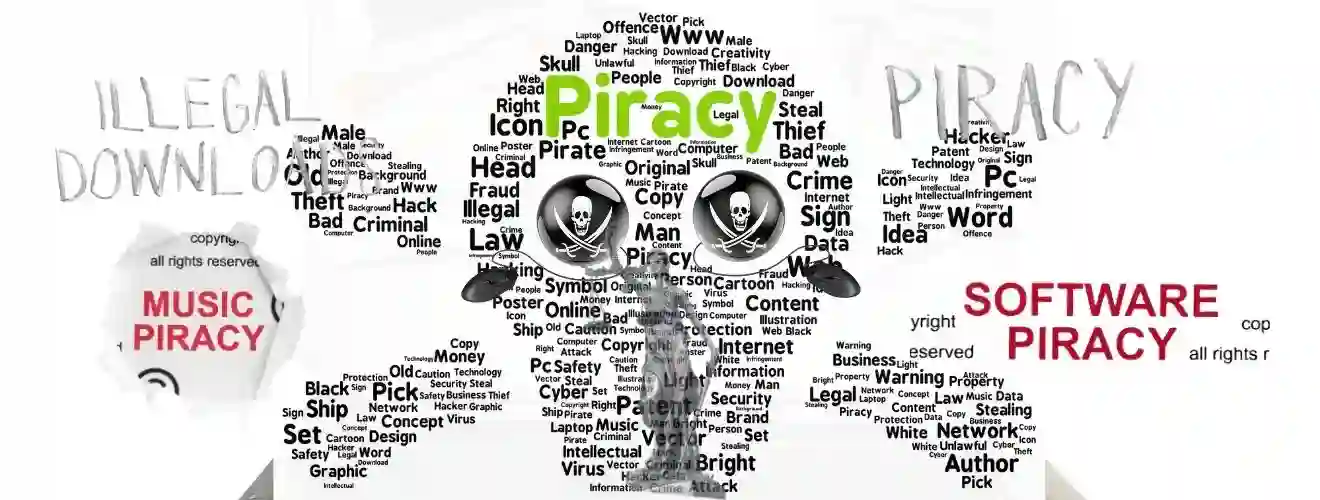
This article explains digital piracy law in Pakistan, covering free downloads, illegal streaming, cracked software, copyright infringement, and the legal risks under the Copyright Ordinance, 1962. It highlights why digital piracy is considered digital theft and how it affects creators, businesses, and Pakistan's digital economy.
Read Article →
Ideas now carry real commercial value. A name can become a brand, a design can become an asset, and creativity can become something worth protecting.
Read Article →
AI systems, or commission AI-assisted work, understanding who owns intellectual property rights.
Read Article →We provide professional legal advice and representation to individuals, businesses and international clients, with a commitment to protecting their legal interests.
Our lawyers focus on clear communication, practical legal guidance and responsible representation throughout every legal matter.
Our advocates apply professional legal knowledge and practical judgment to matters involving individuals, businesses and overseas clients.
We explain legal procedures, available options and potential risks in straightforward language, helping clients understand each stage of their legal matter.
We focus on careful documentation, professional confidentiality and timely communication, keeping our clients' rights and legal interests at the centre of our work.
Have questions or need legal advice? Our Law Firm expert team is ready to assist you.
“A trusted consulting Law Firm is providing expert solutions with strategic insights.”
Discuss your legal needs with our experienced team and explore tailored solutions.