
Criminal Justice System
The criminal justice system is a process, not a single lawsuit. Legal assistance must match the stage of the proceedings, the allegations, the available record and the competent court.
View Service →

Facing an adverse criminal-court order? Learn what criminal revision means in Pakistan, when a revision petition is maintainable, how a High Court or Sessions Judge reviews the lower-court record, and which grounds can justify intervention.

Explore our related legal services for this practice area.
The criminal justice system is a process, not a single lawsuit. Legal assistance must match the stage of the proceedings, the allegations, the available record and the competent court.
View Service →
Our team of experienced cybercrime lawyers is committed to defending your digital rights and offering comprehensive legal protection
View Service →
A. A. Dewan & Co., a leading law firm, understands that facing legal trouble as a juvenile can be an incredibly stressful and confusing experience for both the young person and their family.
View Service →
A criminal appeal can be a complex and challenging process, but with the right guidance, it offers a chance for justice.
View Service →
Filing a criminal complaint is an essential first step in the legal process if you’ve been a victim of or witnessed a crime.
View Service →
Experienced criminal defense attorney providing expert advice and strategic representation for criminal revision and appeals.
View Service →
Defense attorneys help businesses navigate anti-money laundering (AML) laws, ensuring compliance with both national and international regulations.
View Service →
When facing anti-corruption charges in Pakistan, having the right criminal defense lawyer can make all the difference.
View Service →
A Lawyer Criminal Defense plays an essential role in ensuring that the bail process goes smoothly and in securing the best possible conditions for release.
View Service →
We handle a wide range of criminal cases, providing expert defense strategies for a variety of criminal charges, including but not limited to
View Service →Criminal revision is a limited, discretionary supervisory remedy in which a competent court examines the record of an inferior criminal court to determine whether a finding, sentence, order or proceeding suffers from illegality, impropriety, incorrectness or material procedural irregularity. The ordinary statutory framework is found in Sections 435–442 of the Code of Criminal Procedure, 1898, particularly Sections 435, 439 and 439-A. It is not a general right to relitigate the entire case merely because a party disagrees with the outcome.
Before filing: Confirm which court made the order, whether the order is revisable, whether a statutory appeal exists, what relief is legally possible, and whether special legislation changes the ordinary CrPC route.
The correct section is critical to maintainability. The following provisions form the starting point for a criminal revision petition in Pakistan:
The High Court or Sessions Judge may call for and examine records of inferior criminal courts within the relevant jurisdiction to assess correctness, legality, propriety and regularity. Specific interim powers are also addressed in this section.
Provides powers to direct further inquiry in the circumstances specified by the statute. It does not operate as a general reopening of every concluded criminal case.
Sets out discretionary revisional powers and important restrictions, including safeguards for the accused, the prohibition on converting acquittal into conviction in revision and the appeal-versus-revision rule.
Provides revisional powers concerning proceedings before Magistrates, with the statutory role of an Additional Sessions Judge where an appropriate case is transferred.
Sections 440 and 442 also address hearing parties and communication of certain High Court revisional orders to the lower court. The operation of these provisions should be checked against the current statute and applicable decisions.
A strong revision petition identifies a specific material defect in the challenged order and demonstrates that defect by referring to the relevant portion of the existing record. Typical grounds requiring analysis include:
The lower court exercised a power it did not possess, refused to exercise a power it had, or made an order outside the applicable jurisdictional limits.
The order applies a wrong statutory test, overlooks a mandatory legal provision, or proceeds on an interpretation inconsistent with controlling law.
A serious non-compliance with required procedure affected the validity or fairness of the proceeding. Minor harmless irregularities may not justify interference.
A material part of the existing evidence or record was ignored or materially misunderstood in a way that produces a legally unsustainable result.
The conclusion is demonstrably unreasonable on the governing law and the court record, rather than simply an alternative view of disputed facts.
The challenged order lacks application of the statutory conditions that control the specific decision, subject to the nature of the order and forum.
What “on merits” really means: A revision succeeds, if at all, because a legally significant error is established. It is not a guaranteed full re-appreciation of evidence or a second opportunity to argue every fact. Courts ordinarily exercise revisional interference sparingly.
| Question | Criminal Appeal | Criminal Revision |
|---|---|---|
| Nature of remedy | Statutory appeal where the law provides one | Discretionary supervisory jurisdiction |
| Scope of review | Can be broader, subject to the appeal statute and court | Generally focused on legality, propriety, correctness and procedural regularity |
| Availability | Depends on an express right of appeal | Depends on maintainability, forum and statutory limits |
| Facts and evidence | Reappreciation may be available within lawful appellate scope | Not routinely a rehearing on all facts; intervention requires a material revisional basis |
| Critical restriction | Subject to its own limitation and admissibility rules | Section 439(5) restricts revision when the same party could have appealed but did not |
Never file a criminal revision merely because an appeal deadline was missed. The availability of a statutory appeal, a special-law remedy or other lawful procedural route must be reviewed first.
A criminal revision in Pakistan may be filed to challenge certain subordinate criminal court orders involving legal errors, jurisdictional defects or material procedural irregularities. Revisional powers are governed principally by Sections 435, 439 and 439-A of the Code of Criminal Procedure, 1898 (CrPC).
Subject to maintainability and statutory restrictions, criminal revision may be considered on grounds such as:
Important: Criminal revision is not a substitute for an available statutory appeal. The order, grounds and applicable filing requirements must be reviewed before proceeding.
Under Section 439-A CrPC, the Sessions Judge exercises specified revisional powers concerning Magistrates' proceedings. An Additional Sessions Judge may exercise powers in lawfully assigned matters.
Under Sections 435 and 439 CrPC, the High Court may exercise revisional jurisdiction over qualifying subordinate criminal proceedings, subject to statutory limitations.
Filing & Maintainability: Filing deadlines, available remedies and jurisdiction must be checked promptly. Section 439(4)(b) restricts a further High Court revision against specified Sessions Judge revisional orders. Special laws may prescribe different procedures.
Overseas Pakistanis & Foreign Clients: Pakistan-based criminal counsel can assist with reviewing court orders, preparing revision petitions and coordinating representation, subject to applicable court requirements.
The filing sequence is generally document-led and jurisdiction-sensitive. The exact court rules, required copies, verification and listing procedure vary by forum.
Record the court, case/FIR number, date of the challenged order, parties, statutory basis and precise result being challenged. Obtain the signed or certified order as required.
Assess whether an appeal lies, whether Section 439(5) creates a bar, whether a Sessions or High Court revision is competent and whether a special-law route overrides ordinary procedure.
Read the challenged order with applications, pleadings, key evidence, procedural history and relevant statutory provisions. Identify defects that can actually be demonstrated from the record.
State brief facts, dates, maintainability, statutory provisions, numbered grounds of illegality or irregularity and a precise prayer. Cite controlling authorities only after checking their holdings and procedural context.
Attach the order, necessary record, index, authorization and any supporting affidavit or copies required by the relevant court rules. Arrange court fee, filing formalities and service details as applicable.
At preliminary consideration the court may examine maintainability and the apparent merits. Where lawful and necessary, separately seek suspension, protection or directions; filing does not automatically grant a stay.
The revisional court assesses the legal grounds and record under its statutory powers. Relief, if granted, depends on the case and may include modification, setting aside or further inquiry where legally authorized.
A factual allegation that does not appear in the record should not be presented as if the lower court had already received or accepted it. Counsel must verify the scope of what can be considered in revision.
Searches such as “limitation for criminal revision in Pakistan” often produce conflicting answers. It is unsafe to publish a universal “30 days” or “90 days” rule for every petition under Sections 435/439 CrPC. The ordinary revisional provisions, court practice, any special law and the circumstances of delay must be examined together.
The Punjab Prosecutor General's published limitation reference discusses varying historical treatment of criminal-revision delay and practice. It should not be treated as a single deadline applicable to every court and proceeding.
Practical guidance: Obtain the order immediately, preserve the certified-copy application and relevant dates, and seek counsel promptly. Avoid relying on an internet deadline without checking the current forum-specific legal position.
Within statutory power, the court may examine a subordinate court's record, correct material illegality or irregularity, and make an appropriate order. Section 436 allows further inquiry in specified circumstances.
Section 439 contains material restrictions. In particular, revision does not authorize conversion of acquittal into conviction; an order prejudicial to an accused engages the hearing protection in Section 439(2).
Section 440 addresses the discretionary nature of hearing parties in revision, subject to the protection in Section 439(2). There is no automatic right to the particular relief requested merely because the petition is filed or admitted.
These are hypothetical screening examples, not descriptions of actual client outcomes:
A court issues a material order despite a clear statutory restriction on its authority. The revision analysis focuses on jurisdiction and the effect of that defect.
A lower court applies a materially wrong legal standard to an application. Counsel identifies the controlling provision and compares it with the reasons in the order.
An order proceeds on a factual premise demonstrably contradicted by an essential part of the existing record, raising a serious issue of legality or propriety.
One party simply prefers another plausible reading of the evidence. Without a qualifying legal defect, revision may be inappropriate or unsuccessful.
For overseas Pakistanis, dual nationals, foreign residents, international executives and foreign-owned businesses facing criminal proceedings in Pakistan, the relevant legal forum remains in Pakistan. International access to counsel does not turn a Pakistani criminal revision into a foreign-court appeal.
International targeting, jurisdiction clarified: This page serves clients abroad who need representation in Pakistani criminal courts; its procedural guidance is not applicable as a general statement of US, UK, UAE or other foreign criminal law.
This guide is organized around primary statutory provisions and a selected judicial example. Always verify current legislation, amendments, court rules and the holding of any reported judgment before using it in a petition.
Review the impugned order, court hierarchy and the availability of an appeal or alternative remedy.
Identify record-based jurisdictional, legal or material procedural errors rather than relying on vague objections.
Prepare a case-specific petition, indexed supporting documents and relief tailored to the competent court.
Coordinate with Pakistan-based counsel and clients outside Pakistan on documentation and progress.
Practical answers to common searches about criminal revision in the Sessions Court, High Court and under the CrPC.
Criminal revision is a discretionary supervisory process under the Code of Criminal Procedure, 1898. A competent revisional court may examine the record of an inferior criminal court for legality, correctness, propriety or procedural regularity. It is not automatically a fresh trial or a second appeal.
The main provisions include sections 435 (calling for and examining records), 436 (further inquiry in specified situations), 439 (High Court revisional powers), 439-A (Sessions Judge revisional powers), 440 and 442. The applicable section and forum depend on the order, court and any special law.
Obtain the impugned order and relevant certified record, identify the competent revisional court, assess whether an appeal is available, draft clear jurisdictional or legal grounds with a specific prayer, attach required documents and file under the court’s current rules. Filing and listing requirements vary by forum.
Possible grounds include lack or excess of jurisdiction, misapplication of a controlling legal provision, a material procedural irregularity, a legally unsustainable order, or serious non-reading or misreading of record evidence that affects legality or fairness. Mere disagreement with factual appreciation is often insufficient.
Usually not. Section 439(5) CrPC restricts revision at the instance of a party who had an available appeal but did not bring it. Determine appeal rights and any special-law remedy before filing a revision.
Section 439-A confers revisional powers on Sessions Judges concerning proceedings before Magistrates, subject to the statutory framework. Sections 435 and 439 concern related record examination and High Court powers. The correct forum should be selected after reviewing the origin and nature of the order.
Section 439(4)(b) CrPC limits High Court revision in respect of an order made by the Sessions Judge under section 439-A. A different remedy cannot be assumed; its availability requires independent legal analysis.
Do not assume that every criminal revision has one universal filing deadline. Timing, delay, court practice and any special-law or procedural requirement must be examined for the particular forum and order. Seek advice promptly and obtain a certified copy without delay.
No. Filing a revision does not itself mean all proceedings, detention or execution are stayed. Any available interim protection must be specifically sought and granted by the competent court under the applicable law.
Section 439(4)(a) CrPC states that High Court revision cannot convert a finding of acquittal into a conviction. Other statutory procedures, including an available appeal against acquittal, should be examined separately.
A Pakistan-qualified advocate can assess and coordinate a revision for an overseas Pakistani or foreign client concerning proceedings in Pakistan. Authorization, identification, signed documents, filing, personal appearance and remote coordination depend on the court and case.
Revision normally focuses on the legality, propriety and regularity of the impugned proceeding on the available record. It does not ordinarily provide a routine opportunity to retry the entire case, although serious record-based defects may justify intervention.
Firm: A.A. Dewan & Co.
Named legal author: Ahmed Ali Dewan, Advocate Supreme Court (as stated in the site's existing author profile).
Editorial update: 20 October 2026. The responsible Pakistan-qualified lawyer should approve the final legal text before publication.
This material provides general information about criminal revision under Pakistani law. It is not a legal opinion about any specific court order. The correct remedy, forum, timing, filing rules and prospects of success depend on the complete record, current statutes, judicial interpretations and any special law.
Share the challenged court order, decision date, court name, FIR/case number and any available appeal history. Counsel can then assess whether revision is maintainable, which legal grounds appear arguable and what filing steps are appropriate.
Get knowledge on business, IPR, employment, family, banking, and criminal laws in Pakistan.
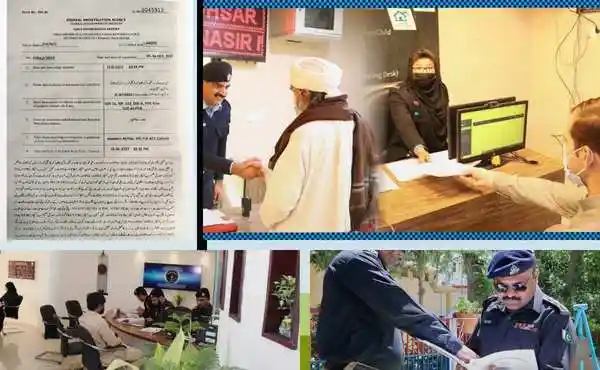
How to File a FIR in Pakistan (Process, Time Frames & Legal Tips) Complete Guide 2026
Read Article →We provide professional legal advice and representation to individuals, businesses and international clients, with a commitment to protecting their legal interests.
Our lawyers focus on clear communication, practical legal guidance and responsible representation throughout every legal matter.
Our advocates apply professional legal knowledge and practical judgment to matters involving individuals, businesses and overseas clients.
We explain legal procedures, available options and potential risks in straightforward language, helping clients understand each stage of their legal matter.
We focus on careful documentation, professional confidentiality and timely communication, keeping our clients' rights and legal interests at the centre of our work.
Have questions or need legal advice? Our Law Firm expert team is ready to assist you.
“A trusted consulting Law Firm is providing expert solutions with strategic insights.”
Discuss your legal needs with our experienced team and explore tailored solutions.