
Criminal Justice System
The criminal justice system is a process, not a single lawsuit. Legal assistance must match the stage of the proceedings, the allegations, the available record and the competent court.
View Service →

A.A. Dewan & Co. assists local and overseas clients with criminal trials in Pakistan, including charge, evidence, cross-examination and defence strategy.

Explore our related legal services for this practice area.
The criminal justice system is a process, not a single lawsuit. Legal assistance must match the stage of the proceedings, the allegations, the available record and the competent court.
View Service →
Our team of experienced cybercrime lawyers is committed to defending your digital rights and offering comprehensive legal protection
View Service →
A. A. Dewan & Co., a leading law firm, understands that facing legal trouble as a juvenile can be an incredibly stressful and confusing experience for both the young person and their family.
View Service →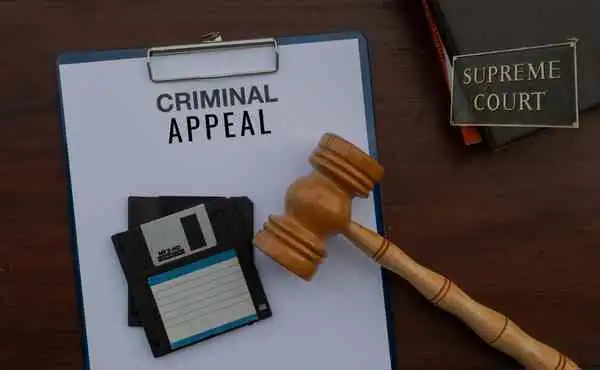
A criminal appeal can be a complex and challenging process, but with the right guidance, it offers a chance for justice.
View Service →
Filing a criminal complaint is an essential first step in the legal process if you’ve been a victim of or witnessed a crime.
View Service →
Experienced criminal defense attorney providing expert advice and strategic representation for criminal revision and appeals.
View Service →
Defense attorneys help businesses navigate anti-money laundering (AML) laws, ensuring compliance with both national and international regulations.
View Service →
When facing anti-corruption charges in Pakistan, having the right criminal defense lawyer can make all the difference.
View Service →
A Lawyer Criminal Defense plays an essential role in ensuring that the bail process goes smoothly and in securing the best possible conditions for release.
View Service →
We handle a wide range of criminal cases, providing expert defense strategies for a variety of criminal charges, including but not limited to
View Service →A criminal trial is the court process used to determine whether the prosecution has proved the charge according to law. The exact procedure depends on the offence, the court and any special statute that applies. Magistrate trials and Sessions Court trials do not follow an identical sequence, so the forum must be identified before trial strategy is planned.
For cases that begin with reporting or arrest risk, review our criminal complaint and FIR guidance and criminal bail services.
The ordinary criminal-process framework is principally found in the Code of Criminal Procedure, 1898, while evidentiary questions are governed by the Qanun-e-Shahadat Order, 1984. The Constitution also protects fair trial and due process. Special criminal statutes can create different courts, procedures, evidentiary rules or timelines, so the ordinary CrPC sequence should not be treated as universal for every offence.
The CrPC contains a separate procedural framework for cases tried by Magistrates, including document supply, charge and evidence stages.
Sections 265A onward govern the ordinary procedure for cases triable by the High Court and Courts of Session, subject to applicable law.
Witness testimony, documents, electronic material and other proof must be assessed under the applicable law of evidence and case-specific rules.
Cybercrime, anti-corruption, money-laundering, narcotics and other special-law cases may depart from the ordinary sequence.
The following sequence explains the ordinary trial path. Exact steps can differ by forum, offence and special law.
After investigation, section 173 CrPC deals with the police report submitted to the competent court. Trial preparation should begin by reviewing the FIR, police report, witness material, recoveries, medical or forensic documents and any electronic evidence.
The accused must be able to understand the prosecution case and prepare a defence. Document-supply requirements differ by procedure and forum, and missing or defective material should be identified before evidence begins.
The court identifies the accusation to be tried. In Sessions-triable cases, section 265D CrPC addresses framing of charge, while section 265E addresses the plea. The defence should compare the charge with the statutory ingredients and the prosecution record.
The prosecution presents witnesses and supporting material. In Sessions-triable cases, section 265F CrPC deals with prosecution evidence. Each witness and exhibit should be evaluated against the allegation, prior statements and documentary record.
Cross-examination tests credibility, accuracy and reliability. A focused cross-examination plan may examine contradictions, omissions, identification, motive, recovery, custody of evidence, medical findings, digital records and other weaknesses relevant to the case.
Section 342 CrPC permits the court to question the accused about circumstances appearing in the prosecution evidence so they can be explained. This stage should be prepared carefully and consistently with the wider defence position.
The defence may rely on the weakness of the prosecution case or may produce defence evidence where legally and strategically appropriate. The decision should be made after the prosecution record has been tested.
Final arguments connect the evidence with the legal ingredients of the charge. After judgment, the available route may include sentencing submissions, criminal appeal or criminal revision, depending on the order and forum.
Trial defence is not limited to denying the allegation. The record should be tested for whether the prosecution can prove each legal ingredient with admissible and reliable evidence. The defence should also identify contradictions between the FIR, witness statements, medical or forensic material, recoveries, documents and courtroom testimony.
Prior statements, internal inconsistencies, delay, opportunity to observe, motive and relationship to the parties may all matter.
Documents should be checked for source, authenticity, relevance, proof requirements and consistency with the pleaded case.
Medical, forensic and scientific material should be compared with the alleged timeline, mechanism and witness version.
Electronic records require careful review of source, preservation, attribution, timestamps, device or account linkage and applicable evidentiary requirements.
Criminal procedure operates within constitutional and statutory safeguards. Article 10A of the Constitution protects fair trial and due process, while the CrPC recognises the right of a person accused before a criminal court to be defended by a pleader.
A focused consultation is more useful when the available court and investigation record is organised before the review.
Not every criminal prosecution follows the ordinary CrPC path in the same way. Special laws may change the forum, investigation agency, bail rules, evidentiary provisions, presumptions, limitation issues or trial procedure. The governing statute should therefore be identified before advice is given.
Digital evidence, account attribution, device records and the current PECA/NCCIA framework can make these trials procedurally distinct.
Cyber Crime Legal ServicesAccountability-related proceedings are often document-heavy and may involve a specialised statutory framework.
Anti-Corruption DefenseTransaction records, beneficial ownership, banking material and source-of-funds evidence can become central to the defence.
Money Laundering Legal ServicesJuvenile proceedings require additional safeguards under the Juvenile Justice System Act, 2018 and should not be handled as an ordinary adult trial.
Juvenile Justice ServicesA criminal case in Pakistan can be difficult to coordinate when a client, family member, director or decision-maker is abroad. A.A. Dewan & Co. can assist with document review, case-status coordination, hearing preparation and strategy conferences for overseas Pakistanis, foreign nationals and international businesses dealing with proceedings in Pakistan.
Remote coordination does not automatically remove personal appearance or other court requirements. Any exemption, representation or attendance issue must be assessed from the actual court order and applicable procedure.
Legal fees depend on the court, offence, number of accused, volume of documents, witness schedule, complexity of evidence and the number of hearings required. A fixed fee should not be quoted responsibly without reviewing the procedural stage and case record.
Trial duration also varies. Court workload, witness attendance, forensic reports, service of process, adjournments, interlocutory applications and special-law requirements can all affect timing. No lawyer can responsibly guarantee a particular result or completion date.
This page is prepared for general legal information and service guidance. Criminal procedure can change according to amendments, special statutes, court rules and the facts of a particular case. Case-specific advice should therefore follow review of the actual record.
Legal author: Ahmed Ali Dewan, Advocate Supreme Court
Reviewed by: A.A. Dewan & Co. Legal Team
Last substantive review: 30 September 2026
Criminal trial procedure is the court process through which a criminal charge is tested. The sequence depends on the offence and forum, but commonly includes supply of case documents, charge, prosecution evidence, cross-examination, examination of the accused, any defence evidence, final arguments and judgment.
After the police report reaches the competent court, the next steps depend on the offence, forum and applicable law. The court may deal with document supply, preliminary issues and charge before evidence is recorded. Special statutes can modify the ordinary CrPC route.
No. The Code of Criminal Procedure contains different procedural provisions for trials before Magistrates and for cases triable by the High Court or Court of Session. The correct sequence must therefore be checked against the forum and the governing offence.
Framing of charge identifies the accusation that the accused is required to answer at trial. In Sessions-triable cases, section 265D CrPC addresses framing of charge after the court reviews the police report or complaint and the prosecution material placed before it.
Cross-examination tests the accuracy, reliability and credibility of prosecution evidence. It can expose contradictions, omissions, weaknesses in identification, defects in documentary proof and problems in the chain or handling of evidence.
Section 342 CrPC allows the court to question the accused so that circumstances appearing in the prosecution evidence can be explained. The court generally questions the accused after prosecution witnesses have been examined and before the defence stage.
Yes, where legally and strategically appropriate. Whether defence witnesses, documents or another form of defence evidence should be produced depends on the charge, prosecution record and overall case strategy.
Bail may remain relevant during a pending criminal case depending on the offence, custody status, procedural stage and applicable law. A bail application and the merits of the trial are connected but legally distinct issues.
There is no single reliable duration for every criminal trial. Timing can depend on the court, offence, number of witnesses, service of process, forensic or documentary evidence, adjournments, special-law procedure and other case-specific factors.
Many preparation and coordination steps can be handled remotely, including document review, case updates and strategy conferences. However, personal appearance or other procedural requirements depend on the court order, case stage and applicable law and cannot be assumed away merely because a client is abroad.
If a criminal case is approaching charge, evidence, cross-examination or final arguments, share the available FIR, challan, court orders, hearing date and key documents for a focused review of the next procedural step.
Get knowledge on business, IPR, employment, family, banking, and criminal laws in Pakistan.

Learn how juvenile detention centers work in Pakistan, children's legal rights, bail, observation homes and rehabilitation under the JJSA 2018.
Read Article →
A practical guide to pre-arrest and post-arrest bail, covering Sections 497–498-A CrPC, petition drafting, legal grounds, evidence, court hearings and judicial principles.
Read Article →
If someone is blackmailing you online, save the threats, protect your accounts, and report the incident. Do not send more money or private images. You can report the account to the social media platform and contact the police or cybercrime authority in the country connected to the incident.
Read Article →Have questions or need legal advice? Our Law Firm expert team is ready to assist you.
“A trusted consulting Law Firm is providing expert solutions with strategic insights.”
Discuss your legal needs with our experienced team and explore tailored solutions.