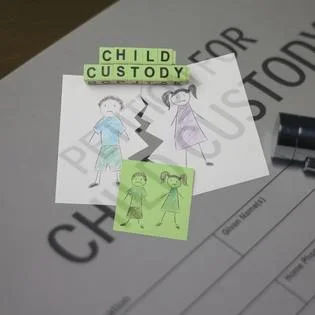
Child Custody & Guardian
Looking for experienced Child Custody and Guardianship, or child support lawyer?
View Service →

A.A. Dewan & Co. assists clients with recovery of dowry articles, bridal gifts and related personal-property disputes through the applicable family-law process in Pakistan, including evidence, documents, court procedure and overseas coordination.

Explore our related legal services for this practice area.
Looking for experienced Child Custody and Guardianship, or child support lawyer?
View Service →
When it comes to recovering dowry articles, legal action can be a vital step, especially in cases where the return of these items is disputed.
View Service →
A.A. Dewan & Co., provides legally valid and Shariah-compliant court marriage services in accordance with Shariah Muhammadi and the laws of Pakistan.
View Service →
Child custody and maintenance in Muslim family law are governed by principles that prioritize the well-being and welfare of the child.
View Service →
A dowry, or “jahez” in Urdu, is money, gifts, or items like furniture, clothes, or gold that the bride’s family gives to the groom’s family during a wedding in Pakistan.
View Service →
The adoption process begins with a consultation with a family law lawyer, adoption agency, or the social welfare department.
View Service →
In Pakistan, the Maintenance of Wife in Islam is both a legal and religious right. According to Islamic law and the Muslim Family Laws Ordinance, 1961, a husband must support his wife financially.
View Service →
Affordable Divorce Lawyer Services provide expert legal guidance for a smooth and stress-free marriage dissolution.
View Service →Quick answer: The Family Courts Act, 1964 expressly includes dowry and the personal property and belongings of a wife and a child living with his mother within the Family Court schedule. The correct legal route still depends on the facts, the articles claimed, the evidence available and the applicable court procedure.
Disputes about dowry articles and bridal gifts commonly arise during separation, divorce, khula or other marital disputes when property given in connection with the marriage is not returned or its ownership and possession are contested. A strong case starts with identifying the articles and preserving reliable evidence.
A.A. Dewan & Co. assists with legal assessment, document preparation, family-court procedure and related family-law matters. Where relevant, this page should be read together with our Dowry Law in Pakistan, Marriage Dissolution, Maintenance of Wife and Family Law Services pages.
| Issue | What matters |
|---|---|
| Dowry & Bridal Gifts | Identify the property and explain its connection with the marriage. |
| Ownership & Possession | Show why the claimant says the articles belong to or should be returned to them. |
| Evidence | Use item lists, receipts, photographs, witnesses and other reliable records where available. |
| Family Court | Follow the applicable pleading, evidence and hearing procedure for the claim. |
The Dowry and Bridal Gifts (Restriction) Act, 1976 defines “dowry” as property given before, at or after marriage, directly or indirectly, to the bride by her parents in connection with the marriage. It separately defines “bridal gift” as property given by the bridegroom or his parents to the bride in connection with the marriage and expressly excludes Mehr from that definition. The Act also defines “property” broadly to include movable and immovable property.
These statutory definitions are important, but the legal treatment of a particular item depends on the facts and the applicable law. An inherited asset, Mehr, a personal belonging or another disputed item should not automatically be described as “dowry” without examining the evidence and legal context.
Prepare a clear description of the articles being claimed rather than relying on general allegations.
Explain how and when the property was given, delivered or kept in connection with the marriage.
Preserve records that help connect disputed articles with the claimant.
Record who currently holds the property and what happened when its return was requested.
Dowry recovery disputes are evidence-driven. The useful evidence depends on the item, the circumstances of the marriage and the dispute over possession or ownership. Organize records before filing rather than relying on memory alone.
Evidence point: Do not manufacture, alter or exaggerate records. The safest approach is to preserve original material and present a clear, consistent account supported by available evidence.
There is no universal document list for every case. The required material depends on the articles, the parties, the procedural stage and the relief being sought. A preliminary legal review should identify what is available and what still needs to be obtained.
CNIC or other relevant identity documents of the claimant and parties, where required.
Nikah Nama, marriage registration material and related family documents.
Receipts, invoices, item lists, photographs and valuation material where relevant.
Copies of notices, complaints, settlement records, judgments or other relevant orders.
The Family Courts Act, 1964 includes dowry and the personal property and belongings of a wife and a child living with his mother in its Schedule. The exact procedural route depends on the facts and the relief sought.
Review the marriage history, disputed articles, possession, evidence and connected family proceedings.
Organize item lists, receipts, photographs, witnesses and other records supporting the claim.
Prepare the appropriate claim with clear facts, identified property and relief sought.
File before the competent forum and follow the applicable process for service and response.
The court considers pleadings, evidence and the responses of the parties before making an order.
If relief is granted, review the order and any further procedural steps required for compliance.
After a family-court claim is filed, the procedural steps depend on the nature of the case and the court record. The opposing party may be called to respond, evidence may be examined and the court may address the issues raised in the pleadings.
The opposing party may contest the item list, ownership, possession or legal entitlement.
The court considers documentary and other admissible evidence relevant to the dispute.
Arguments and evidence are considered according to the applicable family-court procedure.
Any final relief and subsequent compliance steps depend on the court's order and case circumstances.
Dowry disputes frequently arise alongside other family-law issues. Treating each dispute in isolation can create unnecessary gaps in the legal strategy, especially where divorce, dower, spouse maintenance, child maintenance or custody proceedings are also pending.
Overseas Pakistanis may need to manage a Pakistan-based dowry dispute while living in the UK, UAE, Saudi Arabia, Canada, the USA or another country. The practical issues can include document collection, communication, local representation, service of proceedings and coordination with relatives or counsel in Pakistan.
A.A. Dewan & Co. provides Pakistan-based family-law support for eligible cross-border matters, including case assessment, document coordination, drafting and court coordination where appropriate. The exact procedure should be determined after reviewing the facts, documents and jurisdictional issues.
If you are outside Pakistan and need assistance with a Pakistan-related dowry recovery matter, arrange a consultation so the available legal route can be assessed before action is taken.
The West Pakistan Family Courts Act, 1964 includes dowry and the personal property and belongings of a wife and a child living with his mother in its Schedule. The Dowry and Bridal Gifts (Restriction) Act, 1976 provides statutory definitions concerning dowry and bridal gifts.
The Pakistan Code is the official federal legislation portal. The law and procedural position applicable to an individual dispute should be checked against the current legislation, rules and relevant case law rather than relying on a generic online summary.
Legal information: This page provides general information about recovery of dowry articles. It does not guarantee entitlement, a particular court, a specific amount or a particular outcome. Case-specific legal advice requires review of the actual facts and documents.
Our family-law team can assist with the legal work required to assess and manage a dowry recovery matter in Pakistan, including:
Specific identification of disputed articles makes the claim easier to understand and assess.
The case is organized around documents and facts rather than unsupported allegations.
Connected issues can be identified early where the dispute overlaps with other proceedings.
Clients abroad can coordinate Pakistan-based legal work through structured document and case communication.
Yes. The Family Courts Act, 1964 expressly includes dowry and certain personal property matters within the Family Court Schedule. The appropriate claim and evidence depend on the facts of the dispute.
Depending on the case, useful material may include the Nikah Nama, item lists, receipts, photographs, messages, witness details and previous notices or court records.
The Schedule to the Family Courts Act includes dowry and the personal property and belongings of a wife and a child living with his mother. The precise procedural route depends on the claim and facts.
Not necessarily. The Dowry and Bridal Gifts (Restriction) Act, 1976 defines dowry and bridal gifts separately and excludes Mehr from the definition of bridal gift.
Overseas Pakistanis can seek Pakistan-based legal support for eligible matters. Cross-border cases may require additional review of documents, representation, service and jurisdiction.
The legal position depends on the evidence, the relief sought, the nature of the property and the applicable law. A case-specific review is necessary before promising a particular remedy.
If you need legal guidance on recovery of dowry articles, bridal gifts or related family-court proceedings in Pakistan, our team can review the facts and explain the available legal route.
Get knowledge on business, IPR, employment, family, banking, and criminal laws in Pakistan.

Trusted family relationships can sometimes lead to property disputes in Pakistan. Learn the legal options available for overseas Pakistanis when ownership, investment, or property rights become unclear.
Read Article →
Learn how overseas Pakistanis can deal with property disputes in Pakistan, including illegal possession, ownership conflicts, document issues, legal remedies, and ways to protect property rights.
Read Article →
Platforms such as Facebook, Instagram, TikTok, YouTube, Snapchat, and X connect billions of people every day. They help businesses grow, allow people to share ideas, and provide entertainment within seconds.
Read Article →Have questions or need legal advice? Our expert team is ready to assist you.
“A trusted consulting firm providing expert solutions with strategic insights.”
Discuss your legal needs with our experienced team and explore tailored solutions.