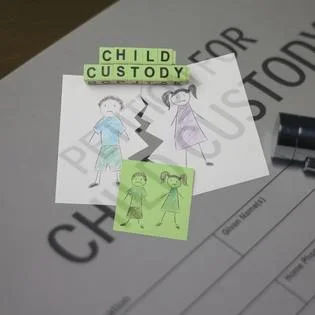
Child Custody & Guardian
Looking for experienced Child Custody and Guardianship, or child support lawyer?
View Service →

A.A. Dewan & Co. assists women, spouses and overseas Pakistanis with wife maintenance matters in Pakistan, including Family Court claims, interim maintenance, iddat-related issues, arrears and case coordination.

Explore our related legal services for this practice area.
Looking for experienced Child Custody and Guardianship, or child support lawyer?
View Service →
When it comes to recovering dowry articles, legal action can be a vital step, especially in cases where the return of these items is disputed.
View Service →
A.A. Dewan & Co., provides legally valid and Shariah-compliant court marriage services in accordance with Shariah Muhammadi and the laws of Pakistan.
View Service →
Child custody and maintenance in Muslim family law are governed by principles that prioritize the well-being and welfare of the child.
View Service →
A dowry, or “jahez” in Urdu, is money, gifts, or items like furniture, clothes, or gold that the bride’s family gives to the groom’s family during a wedding in Pakistan.
View Service →
The adoption process begins with a consultation with a family law lawyer, adoption agency, or the social welfare department.
View Service →
In Pakistan, the Maintenance of Wife in Islam is both a legal and religious right. According to Islamic law and the Muslim Family Laws Ordinance, 1961, a husband must support his wife financially.
View Service →
Affordable Divorce Lawyer Services provide expert legal guidance for a smooth and stress-free marriage dissolution.
View Service →Quick answer: A wife may have a legal claim to maintenance in Pakistan where the applicable law and facts support it. Section 9 of the Muslim Family Laws Ordinance, 1961 addresses inadequate maintenance by a husband, while maintenance is also within the Family Court framework. The amount, period, forum and procedure depend on the facts, applicable law and evidence.
Wife maintenance is also commonly described as nafaqah or nan-o-nafqa. It generally concerns financial support arising from the marital relationship and may involve basic living needs such as food, clothing, accommodation and medical needs, depending on the circumstances of the case.
A.A. Dewan & Co. assists with wife maintenance in Pakistan, including legal assessment, document preparation, Family Court proceedings, interim maintenance issues, post-divorce and iddat-related claims, arrears and connected matters such as divorce and marriage dissolution.
| Issue | What it involves |
|---|---|
| Maintenance During Marriage | Legal support where a husband fails to maintain his wife adequately and a claim or other remedy is being considered. |
| Interim Maintenance | Temporary financial relief that may be ordered during a maintenance proceeding under the applicable Family Courts framework. |
| Iddat-Related Support | Post-divorce maintenance issues that can arise for the iddat period, depending on the facts and applicable law. |
| Arrears & Enforcement | Legal review where ordered or claimed maintenance remains unpaid. |
| Overseas Cases | Pakistan-based legal coordination for clients living outside Pakistan. |
Yes, a wife may have a legal claim to maintenance depending on the marital relationship, the facts of the dispute and the applicable legal framework. Section 9 of the Muslim Family Laws Ordinance, 1961 states that where a husband fails to maintain his wife adequately, the wife may apply to the Chairman for constitution of an Arbitration Council to determine the maintenance amount, without prejudice to other legal remedies.
The current Family Courts Act also identifies maintenance as a matter within the jurisdiction of Family Courts. Its Schedule expressly lists maintenance, dower, dissolution of marriage including Khula, custody, guardianship, dowry and certain personal-property matters.
A maintenance dispute can arise while the marriage continues where adequate support is not being provided.
Separation can create practical questions about residence, support, expenses and the appropriate legal forum.
Maintenance can form part of a wider family dispute involving dissolution, dower, dowry or child-related claims.
Post-divorce maintenance questions require a separate review of iddat, the divorce record and the applicable legal position.
The exact scope depends on the facts and applicable legal principles. In practical maintenance disputes, the claim may address reasonable living and support needs such as:
A maintenance claim should not be based on unsupported estimates. Relevant expenses, living arrangements and available evidence should be reviewed before a specific amount is pleaded.
There is no single monthly amount that applies to every wife maintenance case. The amount is fact-specific and can involve evidence concerning the parties' circumstances, the wife's reasonable needs and the husband's means or resources.
Living expenses, accommodation, medical needs and other relevant requirements may be considered.
Available evidence about income, employment, business interests, resources or earning capacity may be relevant.
Expense records, financial documents and other reliable material can help the court assess the claim.
Marriage status, separation, divorce, iddat and connected family proceedings can affect the legal analysis.
Important: Do not rely on a generic online “maintenance calculator” or a fixed amount as a guaranteed legal entitlement. A court assesses the actual case and evidence.
The Family Courts Act, 1964 contains provisions dealing with interim maintenance. The current official text states in section 17-A that, at any stage of proceedings in a suit for maintenance, the Family Court may pass an interim order for maintenance, with payment to be made by the fourteenth of each month; non-payment can have procedural consequences under the provision.
The precise operation of section 17-A should be checked against the current law applicable in the relevant province and the facts of the case. The important point for a client is that interim maintenance is a distinct stage from the final determination of the claim.
Iddat-related maintenance is a recurring issue in Pakistani family litigation. The legal position after divorce should be assessed separately from maintenance during the subsistence of marriage because the period and legal basis can differ.
The Supreme Court of Pakistan's reported decision in Ambreen Akram v. Asad Ullah Khan, 2026 SCMR 1, decided on 11 September 2025, addressed a wife's entitlement to maintenance in a non-consummated marriage and, in the circumstances of that case, continued the maintenance period through iddat after divorce.
This does not mean every post-divorce maintenance dispute has an identical outcome. The divorce record, facts, contractual terms, pleadings and applicable law must be examined in each case.
Case-law update: The 2026 SCMR 1 decision is particularly relevant to the legal discussion around when a wife's maintenance entitlement arises and the effect of non-consummation or delayed rukhsati. It should be read in its full factual and legal context.
Divorce can create several separate financial and family-law issues. Depending on the facts, a former wife may need advice concerning iddat-related maintenance, dower, dowry articles, personal belongings, child maintenance and other claims connected with the marriage.
Review the divorce date, applicable iddat period and legal basis for the claim.
Dower is legally distinct from maintenance and should be assessed separately under the Nikah Nama and applicable law.
Dowry articles and personal belongings may involve separate claims and evidence.
Where children are involved, child maintenance is a separate legal issue from the former wife's own maintenance claim.
For related matters, see Dowry Law in Pakistan, Recovery of Dowry Articles and Maintenance of Child.
A maintenance matter should be assessed before filing because the correct legal route depends on the marital status, existing proceedings, location, documents and relief being sought. The general workflow can include:
Review the marriage, current support situation, separation or divorce status and connected family disputes.
Organize the Nikah Nama, identity records, expenses, financial evidence and relevant court documents.
Prepare the appropriate maintenance claim, application or response based on the facts and applicable procedure.
File before the competent forum and deal with notice, appearance and the procedural requirements of the case.
Where legally available, interim maintenance and other interim issues may be considered during the proceedings.
Review the final order, compliance position and any further lawful remedy that may be available.
The Family Courts Act provides that suits before a Family Court are instituted by presentation of a plaint or in the prescribed manner, and it sets out provisions concerning notice, written statements, pre-trial proceedings, evidence, judgment and enforcement.
The exact document list varies by case. Clear and organized records can make it easier to assess the claim and identify gaps before filing.
Do not manufacture evidence. Use genuine documents and explain missing records to your lawyer. The appropriate evidence depends on the specific dispute.
If maintenance ordered by a Family Court is not paid, the next step should be based on the exact wording of the order, payment history and procedural stage. The Family Courts Act contains an enforcement provision for money decrees, including recovery mechanisms where the court so directs.
Before seeking enforcement, keep a clear record of the amounts ordered, payments received, missed payments and relevant dates. A lawyer can then assess the appropriate procedural route rather than relying on a generic enforcement formula.
Confirm the monthly amount, start date, duration and any annual increase or other terms.
Maintain bank records, receipts and other reliable evidence of payments and missed instalments.
Prepare a transparent statement of what was ordered, what was paid and what remains outstanding.
Review the available legal mechanism based on the court order and applicable procedural law.
Family circumstances can change. If there is a material change in income, needs, health, living arrangements or other relevant circumstances, legal advice may be required to determine whether the existing maintenance arrangement can be varied under the applicable procedure.
Do not assume that a maintenance amount automatically changes simply because circumstances have changed. The existing order and the applicable law should be reviewed first.
Wife maintenance and child maintenance are related but legally distinct issues. A wife may have her own maintenance claim, while a child's maintenance is a separate obligation concerning the child's needs. The two matters can be raised in connected family proceedings, but the evidence and legal analysis are not identical.
If your case involves both, see our Child Maintenance in Pakistan page and Child Custody & Guardianship service.
Overseas Pakistanis may need to manage a Pakistan-based wife maintenance dispute while living in the UK, UAE, Saudi Arabia, Canada, the USA, Europe or another country. Cross-border matters can involve additional questions about documents, representation, service, jurisdiction and communication with the local court.
A.A. Dewan & Co. provides Pakistan-based legal coordination for eligible overseas clients, including case assessment, document review, drafting, court coordination and representation where appropriate. A foreign residence does not automatically make every cross-border issue identical, so the facts and jurisdiction should be reviewed before a procedure is promised.
Living abroad? Arrange a consultation to discuss your Pakistan-based wife maintenance matter and the documents or representation that may be required.
International clients may search for terms such as spousal support or alimony when looking for maintenance in Pakistan. These terms can describe similar financial-support concepts in other legal systems, but they should not be assumed to have the same legal rules or duration in Pakistan.
For a Pakistan-related family dispute, the applicable Pakistani legal framework, the parties' marital status, the nature of the claim and any relevant court order determine the legal position. This distinction is particularly important for overseas Pakistanis who are comparing a Pakistan case with the family law of another country.
Several legal sources can be relevant depending on the facts. The Muslim Family Laws Ordinance, 1961 contains section 9 on maintenance where a husband fails to maintain his wife adequately.
The Family Courts Act, 1964 gives Family Courts jurisdiction over matters listed in its Schedule, including maintenance, and contains provisions on interim maintenance, procedure and enforcement. The official consolidated text available from the Ministry of Law and Justice is updated through 17 January 2025.
The Dissolution of Muslim Marriages Act, 1939 can also become relevant where maintenance issues are connected with a wife's dissolution proceedings.
Our family-law team can assist with the legal work required to assess, prepare and manage wife maintenance matters in Pakistan, including:
Yes, a wife may have a maintenance claim depending on the facts and applicable law. Section 9 of the Muslim Family Laws Ordinance, 1961 addresses inadequate maintenance by a husband, while maintenance is also within the jurisdiction of Family Courts under the Family Courts Act, 1964.
It is commonly described as maintenance, nafaqah, or nan-o-nafqa. International clients may also use terms such as spousal support or alimony, but those foreign terms should not be assumed to carry identical legal rules in Pakistan.
There is no single guaranteed amount for every case. The amount depends on the evidence and circumstances of the matter, including relevant needs and the financial position or resources considered by the court.
The Family Courts Act contains provisions for interim maintenance in maintenance suits. The exact procedure and effect should be assessed from the current law and the facts of the particular case.
Iddat-related maintenance is recognized in Pakistani family-law litigation, but the entitlement and period should be assessed from the divorce record, facts and applicable law. The Supreme Court's 2026 SCMR 1 decision is a recent important authority on a wife's maintenance entitlement and iddat in the circumstances of that case.
Common documents include the Nikah Nama, CNIC or identity documents, divorce or separation records where relevant, expense evidence, available financial information, previous court orders and payment records. The exact list varies by case.
They can arise in the same family dispute, but they are separate legal claims. The wife's own maintenance and the child's maintenance should be assessed separately and presented with the appropriate evidence.
If a Family Court order is not being followed, the order and payment history should be reviewed to determine the appropriate compliance or enforcement procedure. The Family Courts Act contains provisions concerning enforcement of money decrees.
Eligible overseas clients can obtain Pakistan-based legal assistance for family matters. Cross-border cases may require additional review of documents, service, jurisdiction, representation and communication requirements.
If your husband has stopped providing support, you are dealing with a maintenance dispute during marriage, need advice about iddat-related maintenance after divorce, or have an unpaid maintenance order, our family-law team can review the facts and explain the available legal route.
Get knowledge on business, IPR, employment, family, banking, and criminal laws in Pakistan.

Trusted family relationships can sometimes lead to property disputes in Pakistan. Learn the legal options available for overseas Pakistanis when ownership, investment, or property rights become unclear.
Read Article →
Learn how overseas Pakistanis can deal with property disputes in Pakistan, including illegal possession, ownership conflicts, document issues, legal remedies, and ways to protect property rights.
Read Article →
Platforms such as Facebook, Instagram, TikTok, YouTube, Snapchat, and X connect billions of people every day. They help businesses grow, allow people to share ideas, and provide entertainment within seconds.
Read Article →Have questions or need legal advice? Our expert team is ready to assist you.
“A trusted consulting firm providing expert solutions with strategic insights.”
Discuss your legal needs with our experienced team and explore tailored solutions.