
Cybercrime in Pakistan
Our team of experienced cybercrime lawyers is committed to defending your digital rights and offering comprehensive legal protection
View Service →

A.A. Dewan & Co. guides local and overseas clients through Pakistan's criminal process, from FIR and investigation to bail, trial, appeal and revision.

Explore our related legal services for this practice area.
Our team of experienced cybercrime lawyers is committed to defending your digital rights and offering comprehensive legal protection
View Service →
A. A. Dewan & Co., a leading law firm, understands that facing legal trouble as a juvenile can be an incredibly stressful and confusing experience for both the young person and their family.
View Service →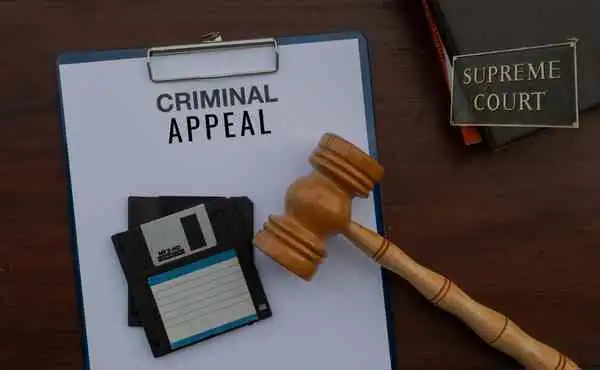
A criminal appeal can be a complex and challenging process, but with the right guidance, it offers a chance for justice.
View Service →
Filing a criminal complaint is an essential first step in the legal process if you’ve been a victim of or witnessed a crime.
View Service →
Experienced criminal defense attorney providing expert advice and strategic representation for criminal revision and appeals.
View Service →
Defense attorneys help businesses navigate anti-money laundering (AML) laws, ensuring compliance with both national and international regulations.
View Service →
When facing anti-corruption charges in Pakistan, having the right criminal defense lawyer can make all the difference.
View Service →
A Lawyer Criminal Defense plays an essential role in ensuring that the bail process goes smoothly and in securing the best possible conditions for release.
View Service →
We handle a wide range of criminal cases, providing expert defense strategies for a variety of criminal charges, including but not limited to
View Service →Pakistan's criminal justice system moves through connected stages: complaint or FIR, investigation, arrest and remand where lawful, bail, prosecution, trial, evidence, judgment, and post-judgment remedies. The ordinary framework is mainly procedural, but special statutes can change the forum, investigation agency, bail rules, trial procedure or appellate route.
This page is general legal information, not case-specific advice. Criminal procedure can differ by offence, province, special statute, court and procedural stage.
A criminal matter is rarely governed by one provision alone. Procedure, offence definitions, evidence rules, constitutional safeguards and special statutes work together.
Article 10 addresses safeguards relating to arrest and detention, while Article 10A recognizes the right to fair trial and due process.
The CrPC provides the ordinary procedural framework for FIRs, investigation, remand, bail, trials, appeals, revisions and related criminal-court procedure.
The offence, ingredients and punishment may come from the Pakistan Penal Code or a special criminal statute.
The Qanun-e-Shahadat framework governs evidentiary questions, while special statutes may contain additional rules.
Understanding each participant's role makes the process easier to follow and helps avoid confusion between investigation, prosecution and judicial decision-making.
Reports the alleged offence, provides information and may supply documents, witnesses or other evidence.
Collects evidence, records relevant material and proceeds under the applicable criminal procedure and special law.
Conducts the State's case before the criminal court in accordance with the applicable prosecution framework.
Exercise judicial powers over remand, bail, trial, evidence, judgment and other matters within jurisdiction.
Respond to allegations, protect procedural rights, challenge evidence and pursue available legal remedies.
May provide factual, medical, forensic, digital or other evidence relevant to the case.
The exact route depends on the allegation and governing law, but the following sequence explains the ordinary criminal-process flow.
A matter may begin with a written complaint. For a cognizable offence, FIR registration is governed by section 154 CrPC. If police action is disputed or unavailable, other lawful complaint routes may need review.
Criminal Complaint & FIR GuidanceInvestigation can involve witness information, documents, medical material, CCTV, digital records, forensic evidence, recoveries and other case-specific material. Evidence preservation should begin early.
Article 10 contains safeguards relating to arrest and detention. Where investigation cannot be completed within the initial lawful period, section 167 CrPC provides a judicial framework for further custody.
Bail strategy depends on whether the matter is bailable or non-bailable, the accused's custody status, the alleged role, evidence and the applicable provisions. Pre-arrest and post-arrest remedies are not interchangeable.
Criminal Bail in PakistanSection 173 CrPC deals with the police report after investigation. The report communicates the investigation result and required case information to the court, subject to the statutory framework and any special law.
The trial stage can involve charge, prosecution evidence, cross-examination, defence steps, arguments and judgment. The exact sequence varies by forum and offence.
Criminal Trial ProcedureThe court assesses the admissible record and applicable law before deciding the case. If conviction follows, sentence and post-judgment options depend on the governing statute and forum.
A statutory appeal may permit broader review, while revision is generally narrower and supervisory. Limitation, forum and maintainability should be checked promptly after an order or judgment.
Criminal Appeal Criminal RevisionCriminal procedure is not only about investigation powers. Constitutional safeguards remain central to how arrest, detention and trial should operate.
An arrested person should be informed of the grounds of arrest as required by Article 10, subject to the constitutional framework.
Article 10 protects the right to consult and be defended by a legal practitioner of choice.
The constitutional framework ordinarily requires production before a magistrate within the prescribed period, subject to recognized exceptions.
Article 10A recognizes entitlement to fair trial and due process in criminal charges.
Allegations alone do not replace proof. Documents, witness credibility, medical evidence, forensic results, digital records, recovery evidence and procedural consistency can all become significant depending on the case.
Bail is a procedural remedy; it does not by itself decide guilt or innocence. The CrPC contains separate rules for bailable and non-bailable offences and gives specified courts powers in relation to bail. The correct strategy depends on the FIR, alleged role, custody status, evidence and special-law context.
For a dedicated explanation of pre-arrest, post-arrest and interim relief, see criminal bail services in Pakistan.
The ordinary CrPC framework remains important, but special statutes can create different investigating agencies, courts, evidentiary rules, bail standards or appeal routes. A general criminal-process page should not be treated as a substitute for checking the law that governs the specific offence.
Cybercrime investigations now fall under the current PECA/NCCIA framework. Digital evidence preservation, account attribution and device records can be central.
Cyber Crime Legal ServicesThese matters can involve special investigation, documentary scrutiny, asset records and forum-specific procedure.
Anti-Corruption DefenseFinancial investigations can involve banking records, transaction trails, beneficial ownership and special statutory procedure.
Money Laundering Legal ServicesJuvenile cases require additional safeguards and should be handled under the applicable juvenile-justice framework.
Juvenile Justice SystemA criminal matter in Pakistan can be difficult to coordinate from abroad. Overseas Pakistanis, foreign nationals, international executives and foreign businesses may need Pakistan-based counsel to review records, coordinate filings, appear where legally permitted, and explain whether personal attendance is required at a particular stage.
Early advice is particularly important when there is arrest risk, an FIR or complaint has been filed, a notice has been received, evidence may be lost, remand is being considered, a bail deadline is urgent, trial has started, or an order must be challenged within limitation.
Bring the FIR or complaint, notices, court orders, relevant dates and the strongest supporting documents to the first review. A clear record usually produces better legal advice than a verbal summary alone.
Advice is aligned with the actual procedural stage rather than using the same approach for every criminal matter.
We focus on FIRs, orders, evidence, chronology and procedural documents that can materially affect the case.
Complaint, bail, trial, appeal and revision strategy can be considered as parts of one litigation sequence.
Pakistan-based representation and document coordination are available for local and overseas clients.
These answers are general. The correct procedure can change with the offence, special statute, province, forum and case stage.
Pakistan’s criminal justice process generally covers reporting of an alleged offence, investigation, arrest or remand where lawful, prosecution, trial, evidence, judgment and post-judgment remedies such as bail, appeal or revision. The exact route depends on the offence, forum and applicable special law.
After an FIR in a cognizable matter, investigation may include collection of documents, witness information, digital or forensic material and other evidence. The investigating agency then proceeds according to the Code of Criminal Procedure and any applicable special law.
Article 10 of the Constitution provides safeguards relating to arrest and detention, including information about the grounds of arrest and the right to consult and be defended by a legal practitioner of choice. Article 10A recognizes the right to fair trial and due process. Special laws can affect procedure, so case-specific advice is important.
Remand concerns judicial authorization for custody when investigation cannot be completed within the initial lawful period. The magistrate considers the legal basis, investigation stage and applicable procedure. The exact type and duration of custody depend on the case and governing law.
Section 173 CrPC deals with the police report submitted after investigation. It records the result of investigation and other required case information for the court. Interim reporting may also arise where investigation remains incomplete within the statutory framework.
Bail depends on the offence, arrest or custody status, evidence, role attributed to the accused and the relevant legal provisions. Bailable and non-bailable matters are treated differently, and pre-arrest or post-arrest relief may require different legal grounds.
A criminal trial can involve charge, prosecution evidence, cross-examination, defence steps, legal arguments and judgment. The precise procedure depends on the trial forum, offence and whether a special statute modifies the ordinary criminal procedure.
An appeal is a statutory challenge available where the law provides an appellate remedy and can permit broader review of a judgment or order. Revision is generally a narrower supervisory remedy focused on legality, jurisdiction or material procedural irregularity. The proper route depends on the order and forum.
Cybercrime investigations are handled under the current PECA framework by the National Cyber Crime Investigation Agency (NCCIA). Digital evidence should be preserved carefully because screenshots, account records, URLs, device data and timelines may become important.
Yes. Overseas Pakistanis and foreign nationals may obtain Pakistan-based legal representation and case coordination for complaints, bail, criminal proceedings, appeals and related matters, subject to the facts, court requirements and any need for personal appearance.
Legal author and reviewer: Ahmed Ali Dewan, Advocate Supreme Court.
Reviewed by: A.A. Dewan & Co. Legal Team.
Last substantive review: 29 September 2026.
This page explains general criminal procedure in Pakistan and is not a substitute for advice on a particular FIR, investigation, arrest, trial or appeal. Special criminal statutes may alter the ordinary CrPC procedure.
Share the FIR, complaint, notice, court order, procedural stage and key documents for a focused review of the next legal step.
Get knowledge on business, IPR, employment, family, banking, and criminal laws in Pakistan.

Trusted family relationships can sometimes lead to property disputes in Pakistan. Learn the legal options available for overseas Pakistanis when ownership, investment, or property rights become unclear.
Read Article →
Learn how overseas Pakistanis can deal with property disputes in Pakistan, including illegal possession, ownership conflicts, document issues, legal remedies, and ways to protect property rights.
Read Article →
Platforms such as Facebook, Instagram, TikTok, YouTube, Snapchat, and X connect billions of people every day. They help businesses grow, allow people to share ideas, and provide entertainment within seconds.
Read Article →Client-centric legal approach that prioritizes your goals, timelines, and legal protection.
We combine deep expertise, personalized strategies, and efficient execution to protect what matters most your Intellectual Property and legal interests.
Known for reliable representation, timely filings, and cost-effective legal services in Pakistan.
Offering trusted legal services with a strong focus on intellectual property, business law, and client success.
Fast filings, precise documentation, and committed to protecting your rights while saving your time and costs.
Have questions or need legal advice? Our expert team is ready to assist you.
“A trusted consulting firm providing expert solutions with strategic insights.”
Discuss your legal needs with our experienced team and explore tailored solutions.