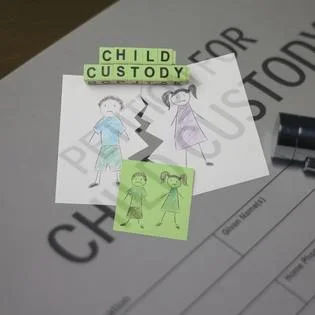
Child Custody & Guardian
Looking for experienced Child Custody and Guardianship, or child support lawyer?
View Service →

A.A. Dewan & Co. assists local and overseas families with Pakistan-law child guardianship and adoption-related matters, including legal assessment, guardianship petitions, Family Court procedure, documentation and cross-border coordination.

Explore our related legal services for this practice area.
Looking for experienced Child Custody and Guardianship, or child support lawyer?
View Service →
When it comes to recovering dowry articles, legal action can be a vital step, especially in cases where the return of these items is disputed.
View Service →
A.A. Dewan & Co., provides legally valid and Shariah-compliant court marriage services in accordance with Shariah Muhammadi and the laws of Pakistan.
View Service →
Child custody and maintenance in Muslim family law are governed by principles that prioritize the well-being and welfare of the child.
View Service →
A dowry, or “jahez” in Urdu, is money, gifts, or items like furniture, clothes, or gold that the bride’s family gives to the groom’s family during a wedding in Pakistan.
View Service →
The adoption process begins with a consultation with a family law lawyer, adoption agency, or the social welfare department.
View Service →
In Pakistan, the Maintenance of Wife in Islam is both a legal and religious right. According to Islamic law and the Muslim Family Laws Ordinance, 1961, a husband must support his wife financially.
View Service →
Affordable Divorce Lawyer Services provide expert legal guidance for a smooth and stress-free marriage dissolution.
View Service →Short answer: Pakistan does not have a statutory adoption framework equivalent to a full legal adoption system that automatically creates a new parent-child legal status. In Pakistan-law proceedings, guardianship under the Guardians and Wards Act, 1890 is the central legal route for obtaining court authority over a minor. Official UK guidance states that adoption is not recognised in Pakistan, while U.S. government guidance explains that guardianship through the Family Court is used in intercountry cases.
The correct application depends on the child’s circumstances, the relief sought, the child’s ordinary residence, the proposed guardian, any existing custody or family proceedings, and—where the family lives abroad—the requirements of the destination country.
If your objective is to obtain lawful authority to care for a child, seek guardianship of the child’s person or property, or prepare for a cross-border immigration or adoption process, the Pakistan-law side should be assessed before documents are filed.
The terms are often used interchangeably online, but they describe different legal outcomes. For Pakistan-law purposes, a guardianship order should not be presented as automatically creating the same parentage consequences as adoption in another country.
| Issue | What it means in Pakistan-law practice |
|---|---|
| Legal framework | The Guardians and Wards Act, 1890 provides the principal statutory framework for appointment or declaration of guardians. |
| Court role | Family Courts handle guardianship matters under the statutory framework applicable to them. |
| Child welfare | The court considers the welfare of the minor and the statutory factors relevant to the proposed guardian. |
| Parentage | A Pakistani guardianship order should not be assumed to have the same legal effect as adoption in another jurisdiction. |
| International use | A Pakistan court order does not by itself guarantee a foreign visa, immigration approval, passport result or recognition abroad. |
The principal statute is the Guardians and Wards Act, 1890. Section 25 of the Family Courts Act, 1964 provides that a Family Court is deemed to be a District Court for purposes of the Guardians and Wards Act and follows the procedure prescribed by that Act.
The Act identifies persons who may apply for an order, including a person seeking or claiming to be guardian and certain relatives or friends of the minor.
For guardianship of the person of a minor, jurisdiction is generally tied to the place where the minor ordinarily resides.
The application must contain statutory information about the minor, proposed guardian, relatives, custody, property where relevant and the grounds for the application.
The court is guided by what appears, in the circumstances, to be for the welfare of the minor and considers the statutory factors set out in the section.
These provisions do not eliminate case-specific issues. Jurisdiction, family circumstances, prior orders, documents, consent or objections and the child’s welfare can materially affect how a petition should be prepared.
There is no single checklist that guarantees appointment as guardian. Section 8 identifies categories of persons who may apply, while the court assesses the legal basis for the application and the circumstances of the minor.
Important: Financial ability alone does not establish entitlement to guardianship. The court considers the legal and factual circumstances relevant to the minor and proposed guardian.
Jurisdiction should be checked before a petition is drafted. Under section 9 of the Guardians and Wards Act, an application concerning guardianship of the person of a minor is made to the court having jurisdiction where the minor ordinarily resides. Property-related guardianship can involve additional jurisdictional considerations.
Before filing, the relevant facts can include the child’s ordinary residence, the type of guardianship sought, any property involved, existing proceedings and the location of relevant parties and records. Filing in the wrong forum can create avoidable objections or delay.
Section 10 requires specified information in a guardianship application. The exact supporting documents depend on the facts, so a case-specific document audit is safer than relying on a generic online checklist.
CNIC, NICOP, passport or other identity documents; marriage or family-registration records where relevant.
Birth record, B-Form, identity record, residence evidence and documents showing the child’s current care arrangements.
Prior court orders, custody material, consent or no-objection documents and affidavits where legally relevant.
Foreign residence, authority, attestation or other documents may be needed where the applicant lives outside Pakistan.
Where records are missing or inconsistent, the issue should be addressed directly in the legal strategy rather than concealed by an incomplete or generic document set.
The precise procedure varies with the facts and court, but a properly prepared matter commonly involves these stages:
Identify whether the objective is guardianship of the person, property, both, or a connected custody or cross-border issue.
Check the child’s ordinary residence and other jurisdictional facts before filing.
Review identity, family, child, custody, consent, residence, property and overseas documents.
Prepare the guardianship petition and supporting material around the statutory requirements and the facts.
File before the competent court and address notices, service or other directions required by the proceedings.
Present the relevant documents, evidence and circumstances concerning the minor and proposed guardian.
If satisfied, the court may appoint or declare a guardian and make appropriate orders.
Certified copies, property permissions, travel matters or foreign-country procedures may require separate steps.
Section 17 states that the court is guided by what, consistently with the law applicable to the minor, appears in the circumstances to be for the welfare of the minor. The section directs attention to factors including the minor’s age, sex and religion, the character and capacity of the proposed guardian, nearness of kin, relevant wishes of a deceased parent, existing or previous relationships and, where appropriate, the child’s intelligent preference.
For that reason, a guardianship case should explain the child’s actual circumstances and why the requested arrangement is legally and practically suitable. A bare assertion that an applicant wants to become guardian is not a substitute for the evidence the court may require.
Grandparents, aunts, uncles, siblings or other relatives may need formal legal authority where they are already caring for a minor.
Death records, family relationships, existing care arrangements and any property or inheritance issues may need separate review.
The child’s history, placement records and available documentation should be verified before a petition is structured.
Where parents or relatives object, the case may require evidence and submissions focused on the child’s circumstances and welfare.
Cross-border matters usually involve two separate legal questions: what order can a Pakistani court make, and what will the destination country require? A Pakistan guardianship proceeding does not automatically settle foreign immigration, passport or adoption requirements.
A.A. Dewan & Co. assists clients managing Pakistan-law family matters from abroad, including legal assessment, document review, petition preparation, court representation and coordination of Pakistan-side requirements.
For U.S.-based families: the U.S. Department of State states that Pakistan is not a Hague Convention country and explains that guardianship through the Family Court is part of the intercountry process. Its current Pakistan guidance should be reviewed before relying on a Pakistani guardianship order for U.S. immigration or adoption purposes. Official U.S. Pakistan adoption guidance.
UK government guidance also states that adoption is not recognised in Pakistan. Families in the UK or elsewhere should confirm the current rules of their own authorities before proceeding. UK government Pakistan profile.
For broader Pakistan family-law assistance from abroad, see our Family Law for Overseas Pakistanis service.
There is no responsible fixed timeline for every guardianship case. Timing can depend on court workload, notices, objections, evidence, missing documents, welfare issues, property questions, overseas paperwork and whether the matter is contested.
Be cautious about guaranteed completion dates before the facts and documents have been reviewed. A useful initial assessment should identify the procedural stages and the risks most likely to affect timing.
Our role is to handle the Pakistan-law side of the matter clearly and within the scope of the applicable court process. Depending on the case, assistance may include:
Scope: Our legal service concerns Pakistan law. If your matter also requires advice on foreign immigration, adoption or family law, obtain advice from a lawyer or authority qualified in that jurisdiction.
The service is focused on Pakistan courts, Pakistan legislation and the Pakistan-law side of cross-border family matters.
Our firm identifies Humayoon Hussain as an Advocate High Court and Family Lawyer.
We help clients abroad organise Pakistan-side documents, instructions, filings and court communication.
The case is structured around the legal relief sought, relevant evidence and the welfare considerations applicable to the minor.
Learn more about A.A. Dewan & Co. or explore our Family Law Services in Pakistan.
UK government guidance states that adoption is not recognised in Pakistan. Pakistan-law child matters are commonly addressed through guardianship under the Guardians and Wards Act, 1890, with the exact route depending on the facts.
A guardianship certificate or court order evidences the appointment or declaration of a guardian for the minor’s person, property or both, depending on the relief granted by the court.
Under section 25 of the Family Courts Act, a Family Court is deemed to be a District Court for purposes of the Guardians and Wards Act. Section 9 of that Act links guardianship of the person of a minor to the place where the minor ordinarily resides.
Overseas Pakistanis can seek Pakistan-law advice and representation. The required authority documents, appearance requirements and court directions depend on the facts of the individual case.
Do not assume that travel will never be required. Some work may be handled through counsel and properly executed authority documents, but the court can require personal steps or evidence depending on the case.
No. A Pakistani guardianship order and foreign immigration, visa, passport or adoption requirements are separate. The destination country’s rules must be checked independently.
Common records include applicant identity documents, child records, residence evidence, family documents, custody or consent material and overseas or property documents where relevant. The final list should be tailored to the case.
There is no fixed universal duration. Timing depends on notices, objections, evidence, court workload, documentation, welfare issues and whether the matter is contested.
Yes. Guardianship may concern the person of the minor, the minor’s property or both. Property-related powers can involve additional court requirements.
We handle the Pakistan-law side of the matter. Foreign immigration or adoption law should be addressed by the relevant foreign authority or a lawyer qualified in that jurisdiction.
For current statutory text and country-specific cross-border guidance, review the primary or government sources below:
Legal information notice: Laws, court practice, immigration rules and administrative requirements can change. This page provides general information and is not a substitute for advice on the facts of a specific case.
If you are considering guardianship, caring for a relative’s child, dealing with an orphaned or abandoned-child matter, or managing a Pakistan guardianship case from overseas, start with a legal review of the facts before filing documents or making immigration plans.
A.A. Dewan & Co. assists local clients, overseas Pakistanis and international families with the Pakistan-law side of child guardianship and related family-court matters.
Legal guidance on custody, guardianship, visitation and child-welfare matters.
Family-court support for child maintenance and related financial responsibility.
Pakistan-law family services for clients living abroad.
Legal support for divorce, dissolution and connected family disputes.
Guidance on spousal maintenance claims and family-court proceedings.
Explore A.A. Dewan & Co.’s broader family-law services in Pakistan.
Get knowledge on business, IPR, employment, family, banking, and criminal laws in Pakistan.

Trusted family relationships can sometimes lead to property disputes in Pakistan. Learn the legal options available for overseas Pakistanis when ownership, investment, or property rights become unclear.
Read Article →
Learn how overseas Pakistanis can deal with property disputes in Pakistan, including illegal possession, ownership conflicts, document issues, legal remedies, and ways to protect property rights.
Read Article →
Platforms such as Facebook, Instagram, TikTok, YouTube, Snapchat, and X connect billions of people every day. They help businesses grow, allow people to share ideas, and provide entertainment within seconds.
Read Article →Have questions or need legal advice? Our expert team is ready to assist you.
“A trusted consulting firm providing expert solutions with strategic insights.”
Discuss your legal needs with our experienced team and explore tailored solutions.